
If you have ever tried to check your Google rankings by just searching your keyword yourself, you already know the problem. Google has publicly confirmed it processes more than 5 trillion searches every year, about 13.7 billion a day. Google shows you results based on your location, your search history, and even your device. So the position 3 you see on your screen is not what a real user in another city, or even a few streets away, will actually see.
That is not a small issue. Google has confirmed it processes more than 5 trillion searches every year, and around 15 percent of daily queries are ones it has never seen before. With that much personalization and query volume happening every second, one browser on one IP address simply cannot give you an accurate, repeatable picture of where you rank.
This is where proxies come in to help you. If you do SEO, run rank tracking software, or scrape SERPs for competitor research, the proxy you choose decides whether your data is clean or completely misleading. Let’s break down what actually works.
Why You Need a Proxy for Google Search
Two things get in the way of accurate SERP data:
Personalization. Google adjusts results based on your IP location, past searches, and device. A single IP cannot show you neutral, location-accurate rankings across different cities or countries.
Blocking. Google is very aggressive about automated traffic. If you send too many search queries too fast from one IP, you will get CAPTCHAs and soft blocks. This is true whether you are running a rank tracker, a scraping script, or a manual audit tool.
A good proxy setup solves both of the problems for you. It lets you appear as a real searcher in the exact city or country you are targeting, and it spreads your requests across different IPs so that Google doesn’t have any reason to flag you.
Looking for proxies for Google Search? Check out proxy plans by Express Nodes.
Premium Proxy Infrastructure
Residential Proxies
🏡
Your content goes here. Edit or remove this text inline or in the module Content settings. You can also style every aspect of this content in the module Design settings and even apply custom CSS to this text in the module Advanced settings.
ISP IPs
🏡
Your content goes here. Edit or remove this text inline or in the module Content settings. You can also style every aspect of this content in the module Design settings and even apply custom CSS to this text in the module Advanced settings.
Fresh IPs
🏡
Your content goes here. Edit or remove this text inline or in the module Content settings. You can also style every aspect of this content in the module Design settings and even apply custom CSS to this text in the module Advanced settings.
Dedicated IPs
🏡
Your content goes here. Edit or remove this text inline or in the module Content settings. You can also style every aspect of this content in the module Design settings and even apply custom CSS to this text in the module Advanced settings.

The Main Proxy Types for SERP Tracking
Let’s take a look at different types of proxies for SERP Tracking so that you can select a good one based on your needs.
Residential Proxies
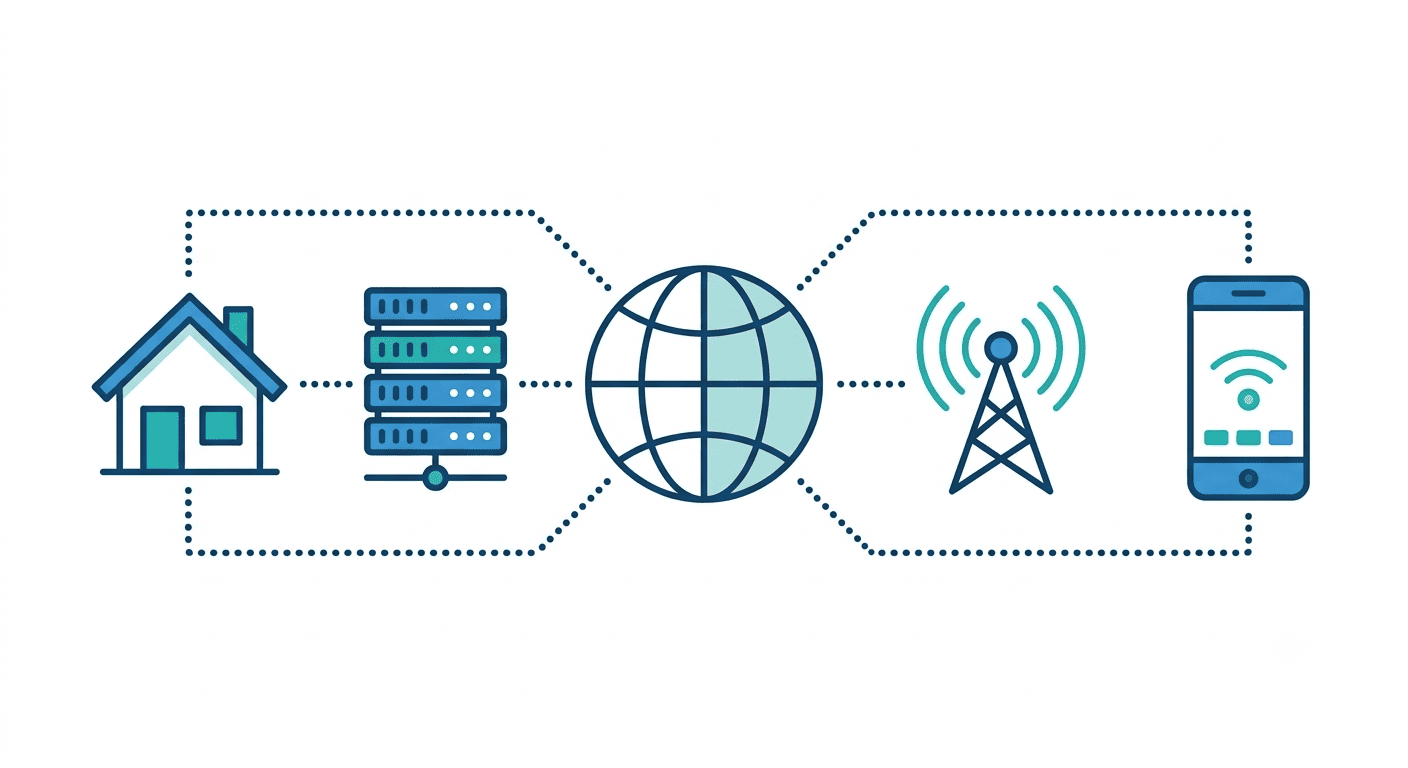
They use real IP addresses assigned by internet service providers to actual homes. So, to Google, a residential proxy looks exactly like a regular person searching from their laptop or phone. That is why residential proxies are a great choice for accurate, localized rank tracking, especially when you are checking rankings city by city or country by country.
But the cost is high because Residential IPs are priced by bandwidth, and since you are also paying for the trust and authenticity of a real ISP connection, they cost more per GB than datacenter options.
Datacenter Proxies
These come from cloud servers and hosting providers, not real households. They are fast and very cheap, which makes them tempting. But Google is very good at recognizing datacenter IP ranges, and it flags or blocks them faster than residential ones. Datacenter proxies can still work for bulk, non-localized checks, technical audits, or situations where you can tolerate occasional blocks and just need volume at a very low price.
ISP (Static Residential) Proxies
They sit in between. An ISP proxy is a residential-grade IP that stays fixed instead of rotating, so you get the trust of a real ISP address along with the stability of a dedicated connection. This matters for anything session-based, like staying logged into a search console-style tool or running a longer monitoring session without your IP changing mid-task.
Mobile Proxies
Mobile proxies route traffic through real mobile carrier networks. They are the hardest type for any platform to block, since carrier IPs are shared by thousands of everyday phone users. For SERP tracking, they are usually overkill and pricier than needed, but they are worth knowing about if you are tracking mobile-specific rankings or dealing with an unusually aggressive detection system.
Quick Comparison
|
Proxy Type |
Best For |
Block Risk on Google |
Relative Cost |
|
Residential |
Localized, accurate rank tracking |
Low |
Medium to high |
|
Datacenter |
Bulk, non-localized checks |
High |
Low |
|
ISP (Static Residential) |
Session-based monitoring, dashboards |
Low |
Medium |
|
Mobile |
Mobile SERP tracking, tough targets |
Very low |
High |
For most of the SEO teams and content marketers, rotating residential proxies are the sweet spot between accuracy and cost, with datacenter proxies kept as a backup for high-volume, low-stakes checks.
What to Actually Look for in a SERP Tracking Proxy
Once you know the proxy type you need, the provider you pick still makes a big difference. Here is what matters in practice.
Geo-targeting depth.If you want more than country-level targeting. City, state, and even ZIP-level targeting matters a lot if you are tracking local search results or a Google Business Profile presence.
Session control. Some tracking tasks need a fresh IP for every single request. Others need the same IP to hold for a few minutes so a session does not break in the middle of the task. A good provider lets you switch between rotating and sticky sessions depending on what you are doing.
Success rate on Google specifically. A proxy pool can be great for general scraping and still perform poorly on Google, because Google’s detection systems are very strict. Ask for or test the success rate on actual Google SERPs, not just a general uptime number.
Pricing that matches your usage. A SERP result page is small, usually a few hundred KB. If you are billed per GB, your actual cost per keyword checked is often lower than it looks on paper. Pay-as-you-go plans without expiring bandwidth are worth prioritizing if your tracking volume changes month to month.
Protocol support. Make sure HTTP(S) and SOCKS5 are both supported, since most rank tracking tools and scraping scripts expect one or the other.
Common Mistakes People Make
A few patterns show up again and again with beginners doing their own rank tracking:
- Using the same handful of IPs for every keyword check, which gets them flagged really fast
- Picking datacenter proxies because of the lower price, then wondering why local rankings look wrong
- Ignoring session type and ending up with broken, inconsistent sessions
- Not matching the proxy location to the actual market being tracked
If you are just getting started, it is worth testing with a small residential proxy plan before committing to a large monthly plan, so that you can see real success rates on your specific keyword set first.
Why do I need a proxy to check Google rankings?
Google personalizes results by location and device, so your own connection will not show what real users see somewhere else. A proxy lets you check rankings from the exact city or country you are targeting.
Are residential or datacenter proxies better for SERP tracking?
Residential proxies are safer because Google rarely flags real ISP IPs. Datacenter proxies are cheaper and faster but get detected more easily, so they suit bulk, non-localized checks better.
How many proxies do I need for daily rank tracking?
There is no fixed number. You just need enough IP diversity that no single IP repeats automated requests to Google too quickly. A rotating residential pool handles this on its own.
Can I use free proxies for Google SERP tracking?
Not really. Free proxies are shared by too many users, get blocked fast, and lack the geo-targeting accuracy rank tracking needs. A paid residential or ISP plan is far more reliable
Final Thoughts
There is no single best proxy for every SERP tracking job. If you need clean, geo-accurate rankings across cities or countries, residential proxies are the safer bet. If you are running bulk, non-localized checks and can tolerate the occasional block, datacenter proxies save money. And if session stability matters more than IP rotation, an ISP proxy is often the better fit.
What matters most is matching the proxy type to what you are actually trying to measure, instead of defaulting to whatever is cheapest. Accurate SERP data is only useful if you can trust it, and that trust starts with the proxy behind it.

Shared vs Dedicated Proxies: Which Fits Your Use Case?
If you have even spent ten minutes shopping for proxies, you have probably faced this problem before. Every provider's page asks whether you need shared or dedicated proxies, and if you don't know what that means, let me help you. Here's a number worth looking at:...
Best proxies for eBay and Etsy sellers
Marketplace sellers rarely think about proxies until something goes wrong. A second store gets flagged for "suspicious activity." A price-tracking script gets rate-limited after twenty requests. A perfectly legitimate second shop gets linked to the first one and both...

Best Proxies for Reddit Account Management
If you manage more than one Reddit account, you already know how quickly things can go wrong. One day your posts are getting traction, and the next day your account is shadowbanned, and you have no idea why. Reddit does not take moderation lightly either. In the first...