
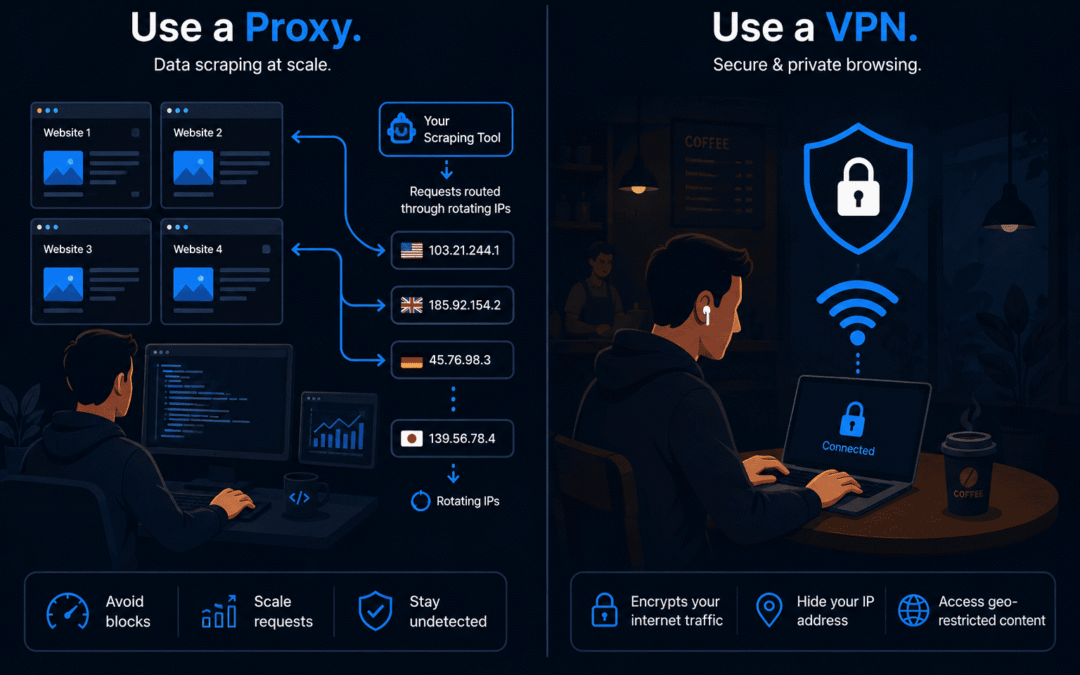
If you’ve ever tried to scrape data, manage multiple social media accounts, or just tried to browse without actually being tracked, you may have asked yourself this question: Should I use a proxy or a VPN?
Both of these tools hide your actual real IP address. But they work very differently, and picking the wrong one can actually make your work slow, get your accounts flagged, or just waste a lot of your money. According to Precedence Research, the global VPN market was valued at nearly $49 billion in 2022 and is projected to grow at a CAGR of over 22% through 2032. , which tells you how mainstream these tools have actually become. But mainstream doesn’t always mean right for your use case.
What Is a Proxy?
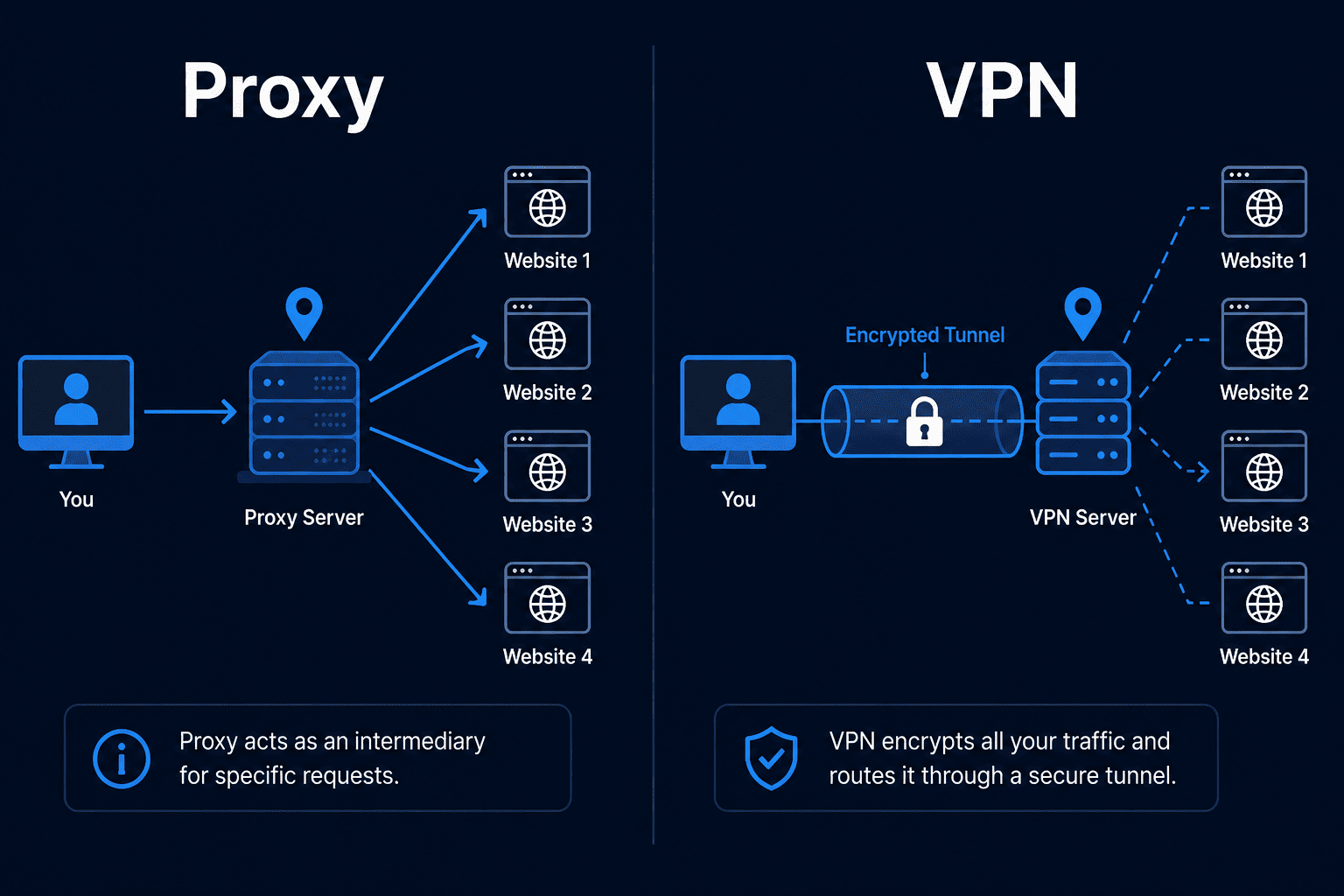
A proxy is like a middleman. You send a request, it goes to the proxy server first, and then the proxy sends it to the website you’re trying to reach. The website only sees the proxy’s IP address. The website cannot see your real IP address. That’s how it works.
Now there are different types of proxies and they matter a lot depending on your use case. Dedicated proxies mean that you get one IP that’s yours alone. Nobody else is using it except you. So it stays clean, it doesn’t have any random person’s ban history attached to it, and it’s chances of getting flagged are very low.
Residential proxies are a different thing. These use real IP addresses that internet service providers assign to real actual homes. So when a website checks your IP, it looks like a real regular person is sitting at home browsing the internet. It doesn’t look like some bot is using it. That’s why residential proxies work so well for tasks like webscraping. Sites have a much harder time detecting and blocking them.
Are you looking for premium clean proxies? Then check out Express Nodes
What Is a VPN?
A VPN reroutes your internet traffic through another server and changes your visible IP, similar to a proxy. But it adds something on top which is encryption.
Everything leaving your device gets encrypted. Not one tab. Not one app. Everything. Your ISP can’t see what you’re doing. Neither can anyone snooping on your network.
VPNs are really built for individual users. Someone working from a coffee shop, accessing company files remotely, or just not wanting their ISP to track every site they visit. That’s the target audience.
Premium Proxy Infrastructure
Residential Proxies
🏡
Your content goes here. Edit or remove this text inline or in the module Content settings. You can also style every aspect of this content in the module Design settings and even apply custom CSS to this text in the module Advanced settings.
ISP IPs
🏡
Your content goes here. Edit or remove this text inline or in the module Content settings. You can also style every aspect of this content in the module Design settings and even apply custom CSS to this text in the module Advanced settings.
Fresh IPs
🏡
Your content goes here. Edit or remove this text inline or in the module Content settings. You can also style every aspect of this content in the module Design settings and even apply custom CSS to this text in the module Advanced settings.
Dedicated IPs
🏡
Your content goes here. Edit or remove this text inline or in the module Content settings. You can also style every aspect of this content in the module Design settings and even apply custom CSS to this text in the module Advanced settings.

Where They Actually Differ
Now, let’s understand the difference between Proxies and VPN
Speed. Proxies are faster. Encryption creates overhead, and when you’re running something at scale like hundreds of requests per minute, that overhead adds up. Proxies skip the encryption step so the traffic moves quicker.
Detection. A lot of platforms actively try to block VPN traffic. It’s a recognized pattern. Residential proxies and ISP proxies are much harder to detect because the IPs genuinely look like regular internet users. There’s no obvious sign that this is a VPN signal.
Scale. VPN gives you one IP at a time, only one. If you need to rotate through multiple IPs, run parallel sessions, or scrape from different locations simultaneously, a VPN just doesn’t do that. Proxies do that work. You can rotate through hundreds of IPs depending on your plan.
Encryption. VPN wins here and it’s not close. If you’re handling sensitive data and privacy is genuinely the concern, a VPN is the right call. But for scraping, automation, and social media account management, most people don’t need traffic encryption. They need clean rotating IPs that don’t get blocked.
Use a Proxy When You’re Doing This
- Scraping product data, prices, or search results at any kind of volume
- Running multiple accounts on social media or e-commerce platforms
- Doing SEO monitoring or checking rankings from different regions
- Running bots, crawlers, or any automated workflow
- Ad verification across many different locations
For all of this, dedicated proxies or rotating residential proxies are exactly what you need. They’re built for these tasks.
Check out premium proxies by Express Nodes
Use a VPN When You’re Doing This
- Browsing on public WiFi and you don’t trust the network
- Watching something that’s geo locked in your region
- Keeping your activity private from your internet provider
- Connecting securely to a company’s internal systems when working remotely
VPNs are personal tools. They work great for individual privacy. They’re not built for scale or automation.
Can You Run Both at the Same Time?
Some people do, yeah. VPN running in the background for general browsing, proxy configured for whatever scraping or automation tool they’re using. They serve different purposes so they don’t cancel each other out.
But if you’re choosing one specifically for business tasks? Proxies are a great choice.
So Which One Do You Actually Need?
It entirely depends on what you’re actually doing.
If you’re a regular user who just wants complete privacy while browsing, a VPN is completely fine for you. It’s actually pretty easy to set up, it covers everything on your device, and it does what it’s actually supposed to do.
But if you’re doing anything related to tasks like automation, scraping, managing multiple social media accounts, or collecting data at a large scale, the VPN vs proxy comparison isn’t really that close. You need proxies for tasks like this. And not just any proxies. You need good quality ones with clean residential or ISP IPs behind them, because that’s the part that actually keeps you under the radar.
Express Nodes has dedicated proxies, rotating residential proxies, and ISP proxies for exactly these kinds of workflows. Whether you’re pulling product data, running accounts, or verifying ads across regions, the right proxy setup is what makes the difference between getting blocked constantly and actually getting the job done. You can browse proxy plans on Express Nodes and find something that fits what you’re working on.
Proxies for Price Monitoring and Competitor Tracking (E-commerce)
Amazon changes prices on its platform roughly 2.5 million times a day, according to price intelligence firm Profitero, compared to around 50,000 monthly price changes each for competitors like Best Buy and Walmart. That number alone explains why manual price checks...
Best Proxies for LinkedIn Automation and Outreach
If you have ever sent more than a handful of connection requests in a day, you already know LinkedIn is watching. In fact, a 2026 report found that 23% of users relying on browser-based automation tools faced account restrictions within just 90 days. It tracks where...

Best Proxies for Twitter/X Account Management
If you manage more than one Twitter/X account, you already know the problem. You log in, and everything looks fine, and then suddenly one account gets flagged or suspended without any major reason. A few hours later, the account next to it goes down too. This isn't...