
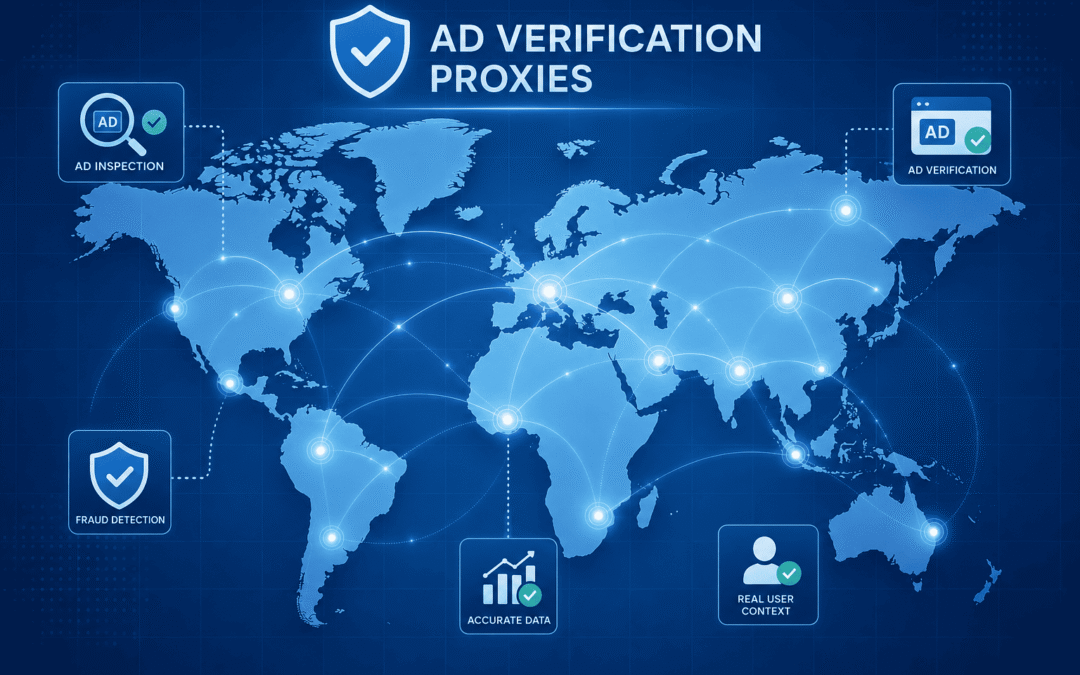
You set up an ad campaign, and then you allocate the budget. You watch that your ad is getting impressions, but here’s the catch a portion of those impressions may have never reached a real person.
Lunio’s 2026 Global Invalid Traffic Report found that 8.51 percent of all digital ad traffic worldwide is invalid, translating into an estimated $63 billion in wasted ad spend in 2025. This is why ad verification is important, and proxies have become a critical part of any serious verification workflow.
What Is Ad Verification?
Let’s first understand what ad verification is.
Ad verification is the process of confirming that your digital ads are actually showing up correctly, like in the right location, on approved websites, to real human users, and in a brand-safe environment.
There are four things that ad verification checks
- Placement
Is the ad actually appearing on the website you paid for, or has it been redirected to a low-quality site? - GEO targeting
Is the ad showing up in the intended region, or is it showing up in the wrong country? - Viewability
Is the ad visible on the screen, or has it been stacked behind other ads where no one will ever see it? - Brand safety
Is the ad appearing next to appropriate content, or is your brand logo sitting next to something harmful?
If you are running global campaigns, the only way to verify placements is by switching your original IP address. That is exactly where proxies come in to help you.
Want to run cleaner ad verification checks? Check out Express Nodes proxies built exactly for this.
Premium Proxy Infrastructure
Residential Proxies
🏡
Your content goes here. Edit or remove this text inline or in the module Content settings. You can also style every aspect of this content in the module Design settings and even apply custom CSS to this text in the module Advanced settings.
ISP IPs
🏡
Your content goes here. Edit or remove this text inline or in the module Content settings. You can also style every aspect of this content in the module Design settings and even apply custom CSS to this text in the module Advanced settings.
Fresh IPs
🏡
Your content goes here. Edit or remove this text inline or in the module Content settings. You can also style every aspect of this content in the module Design settings and even apply custom CSS to this text in the module Advanced settings.
Dedicated IPs
🏡
Your content goes here. Edit or remove this text inline or in the module Content settings. You can also style every aspect of this content in the module Design settings and even apply custom CSS to this text in the module Advanced settings.

Why Regular Verification Methods Fall Short
Without proxies, ad verification has one major problem, which is your IP address.
When you check your own ads, the ad platform recognises your location and serves you a version of the ad that may not reflect what users in other regions or on other devices are actually seeing.
When users browse the internet, their experience is actually influenced by cookies, browsing history, and personalisation algorithms. This can skew verification ad verification results.
Proxies actually provide a clean, anonymous browsing environment, ensuring that ads are viewed without any bias.
How Proxies Fix the Problem
A proxy routes your internet traffic through a different IP address. This means that you can see how your ad actually appears in Germany, the US, or any other country without even leaving your office desk.
There is one more important benefit, which is that a large proxy enables seamless IP rotation.
Each verification request originates from a different IP address, keeping the traffic under the radar of rate limiters and anti-bot systems. If an IP is blocked, the system simply switches to another, ensuring uninterrupted verification.
Types of Proxies for Ad Verification
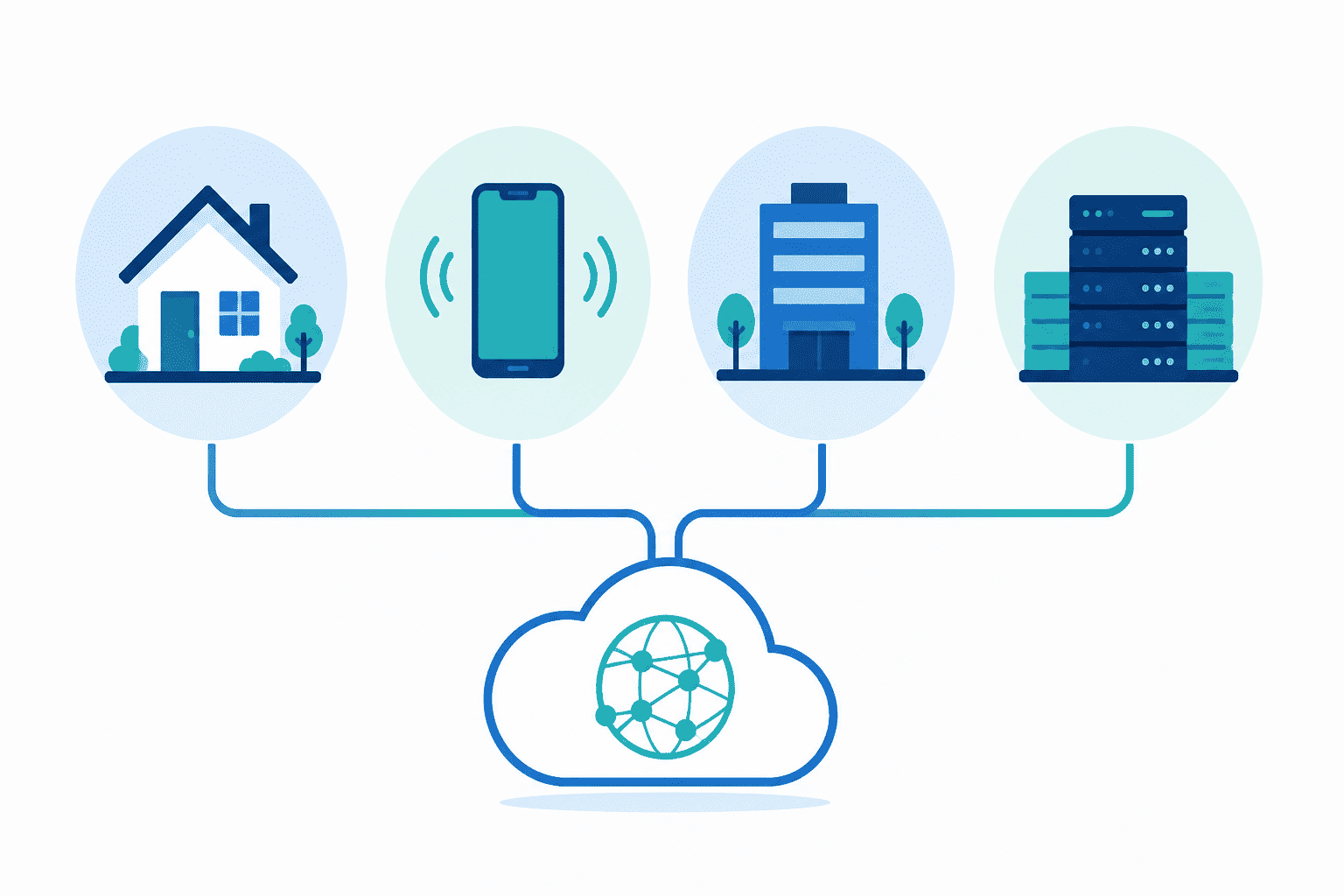
Not all proxies perform equally for ad verification. Here is a breakdown of what each type offers.
- Residential Proxies
Residential proxies are IP addresses assigned to real internet service providers and devices. Because of how these IP addresses are assigned, residential proxies are the most authentic type. They look like actual regular home users to ad platforms, which means they are less likely to get flagged.
These are the preferred option for verifying display ads, checking geo-targeted campaigns, and auditing placements on major publisher networks
- Mobile Proxies
Mobile proxies route traffic through mobile carrier networks, making them idea choice for testing mobile ads. Since most ad spend is shifting toward mobile, being able to see exactly how an ad renders on a mobile carrier IP is increasingly important.
3. ISP Proxies (Static Residential)
Static residential ISP proxies allow advertisers and verification tools to view ads exactly as real users would see them from different locations. The key benefit here is stability. Unlike rotating proxies that change IPs frequently, ISP proxies hold a consistent IP, which is useful for longer session monitoring and user journey testing.
- Datacenter Proxies
Datacenter proxies are not tied to real users like residential proxies. That’s why it is very easy for websites to detect and block it. They can still work for basic checks on public-facing ads, but they are not good for in-app or social media verification, where bot detection is very strong.
Take a look at premium proxies by Express Nodes for ad verification
Proxy Comparison Table for Ad Verification
| Proxy Type | Detection Risk | Geo-Targeting | Best For | Cost |
| Residential | Low | Excellent | Display ads, geo checks | Medium-High |
| Mobile | Very Low | Excellent | Mobile ad verification | High |
| ISP / Static Residential | Low | Good | Long session monitoring | Medium-High |
| Datacenter | High | Good | Basic public ad checks | Low |
What to Look for in a Proxy for Ad Verification
Before choosing a proxy, check for these features
- IP Pool Size
A larger pool means more location coverage and less risk of IP reuse triggering detection. - GEO targeting depth
Country-level targeting is a baseline. But for serious verification, you need city-level or carrier-level targeting. - Rotation options
For spot checks and fraud detection, rotating proxies work well. For user journey testing, sticky sessions are better. - Compliance
You should always choose ethically sourced residential or mobile proxies that adhere to GDPR, CCPA, and platform policies. - Reliability
Poor connection speeds introduce latency that distorts your verification data. Always test performance before committing to a provider.
Final Thoughts
Proxies make proper ad verification very easy by letting you check placements from different locations, on any device type, without revealing yourself to the platforms you are auditing. The right proxy type depends on what you are verifying, but for most marketers, rotating residential proxies are the most reliable starting point.
Are you looking for premium proxies for ad verification? Express Nodes offers rotating residential proxies with global geo-targeting built for professional verification workflows. Explore our plans now.
How to Hide Your IP Address: Proxies vs VPNs vs Tor
About 23% of internet users aged 16 and over said they used a VPN in the second quarter of 2025, based on GWI survey data in the Digital 2026 Global Overview Report. That's nearly one person in four online, and most of them want the same thing, which is to stop...
How to Set Up a Proxy in Chrome: Complete Guide
Chrome accounted for 69.39% of worldwide browser market share in August 2026, according to Statcounter Global Stats. That's a lot of people who will eventually want to browse from a different IP address. So if you want your browsing to go through a proxy, you will...
How to Check if a Proxy Is Working: 7 Easy Methods
The global proxy server market is projected to grow from $1.746 billion in 2025 to $2.649 billion by 2031, a 7.2% CAGR driven mainly by rising cybersecurity needs and demand for geo-restriction bypass. A lot of that growth is actually coming from businesses scraping...