
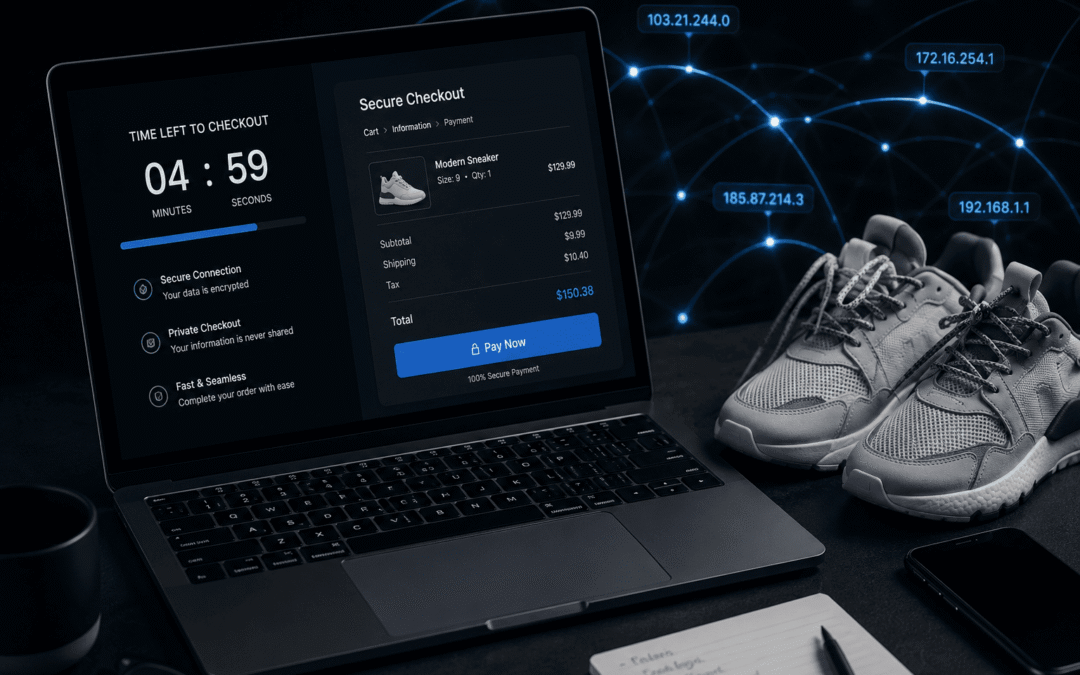
A hyped release goes live. You refresh, you click, and the size you wanted is gone before the page even finishes loading. That’s not bad luck. Nike alone says its SNKRS app fields an average of 12 billion bot calls a month, with bots making up anywhere from 10% to 50% of entries depending on the drop (CNBC). Someone else’s automated setup got through on cleaner infrastructure than yours.
Sneaker copping is now turned into an infrastructure problem more than a shopping problem. Retailers cap purchases per IP address and per account, so the only way to place more than one order is to look like more than one shopper. That’s where proxies come in to help you.
The right proxy setup decides whether your tasks make it to checkout or get flagged before the page even loads.
This guide breaks down which proxy types actually work in 2026, what changes site by site, and how to avoid the setup mistakes that burn a proxy pool before release day even starts.
Why Sneaker Sites Need a Proxy Workaround in the First Place
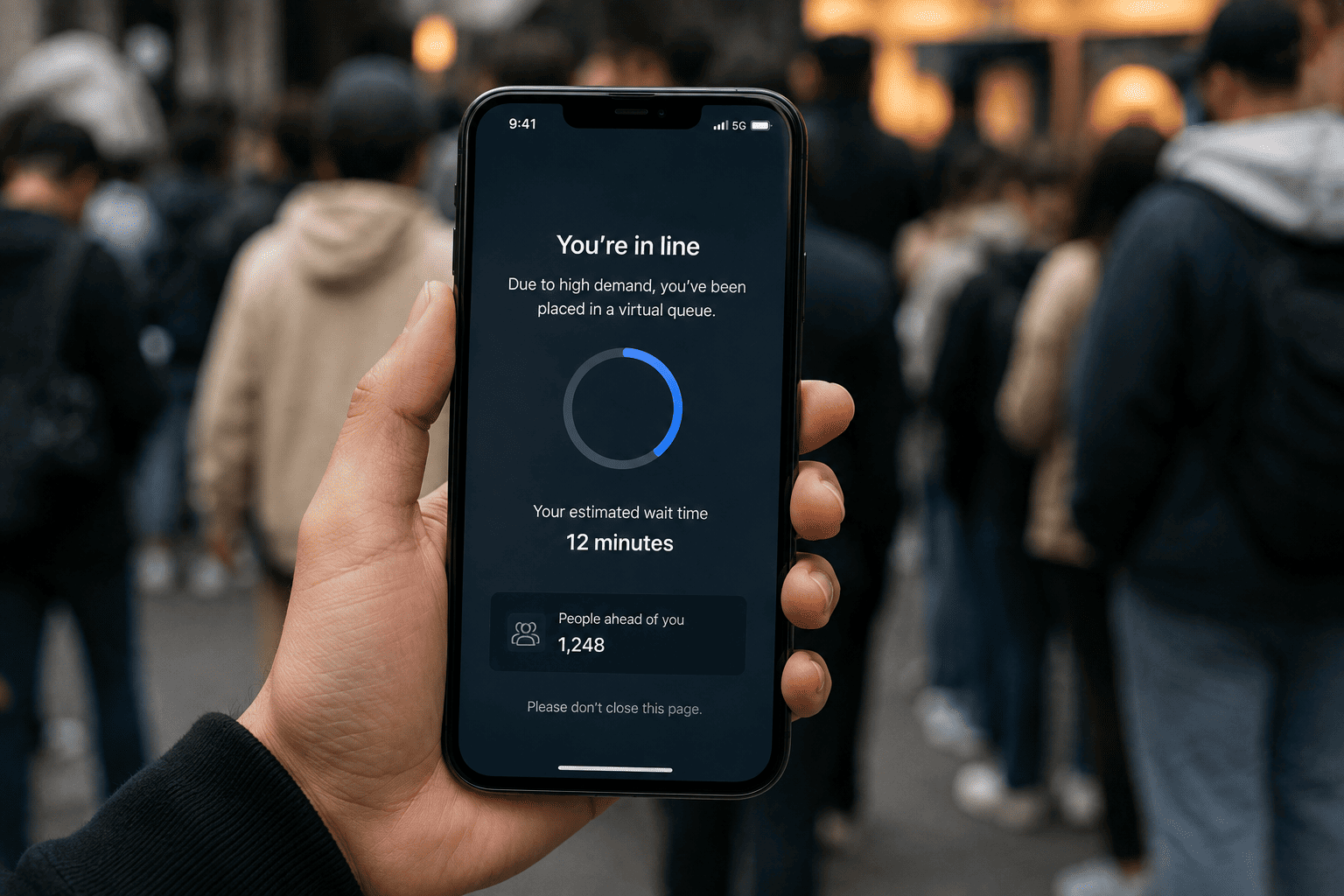
Limited releases sell out in seconds, and demand always outpaces the supply by a wide margin. Brands already know this, and most flagship drops now run on some form of queue, raffle, or draw system layered on top of bot detection tools like Akamai, PerimeterX, and Datadome. These systems watch for patterns: too many requests from one IP, checkout attempts that move faster than a human could type, or accounts that share a connection.
A single IP address can only place so many orders before a retailer’s system notices and shuts it down. Sneaker resellers get around this by running many tasks in parallel, each one routed through its own proxy, so every attempt looks like a separate, ordinary shopper. Without this spread, a bot running fifty tasks from one network gets banned within seconds of a release going live.
The sneaker resale market has grown into a large economy, with recent industry estimates putting global resale revenue past the ten billion dollar mark and still climbing. That scale is exactly why proxy quality has become the deciding factor, so when the thousands of bots are chasing the same two hundred pairs, the copper with the cleanest, fastest IP wins, not the one with the best bot.
Set up your next drop with proxies built for speed and stability. Express Nodes gives you the clean, fast IPs your bot needs to actually make it through checkout.
Premium Proxy Infrastructure
Residential Proxies
🏡
Your content goes here. Edit or remove this text inline or in the module Content settings. You can also style every aspect of this content in the module Design settings and even apply custom CSS to this text in the module Advanced settings.
ISP IPs
🏡
Your content goes here. Edit or remove this text inline or in the module Content settings. You can also style every aspect of this content in the module Design settings and even apply custom CSS to this text in the module Advanced settings.
Fresh IPs
🏡
Your content goes here. Edit or remove this text inline or in the module Content settings. You can also style every aspect of this content in the module Design settings and even apply custom CSS to this text in the module Advanced settings.
Dedicated IPs
🏡
Your content goes here. Edit or remove this text inline or in the module Content settings. You can also style every aspect of this content in the module Design settings and even apply custom CSS to this text in the module Advanced settings.
The Proxy Types That Matter For Copping
Not every proxy type works on every site. Understanding the difference between them is the first step to actually building a setup that survives a drop instead of dying in the queue.
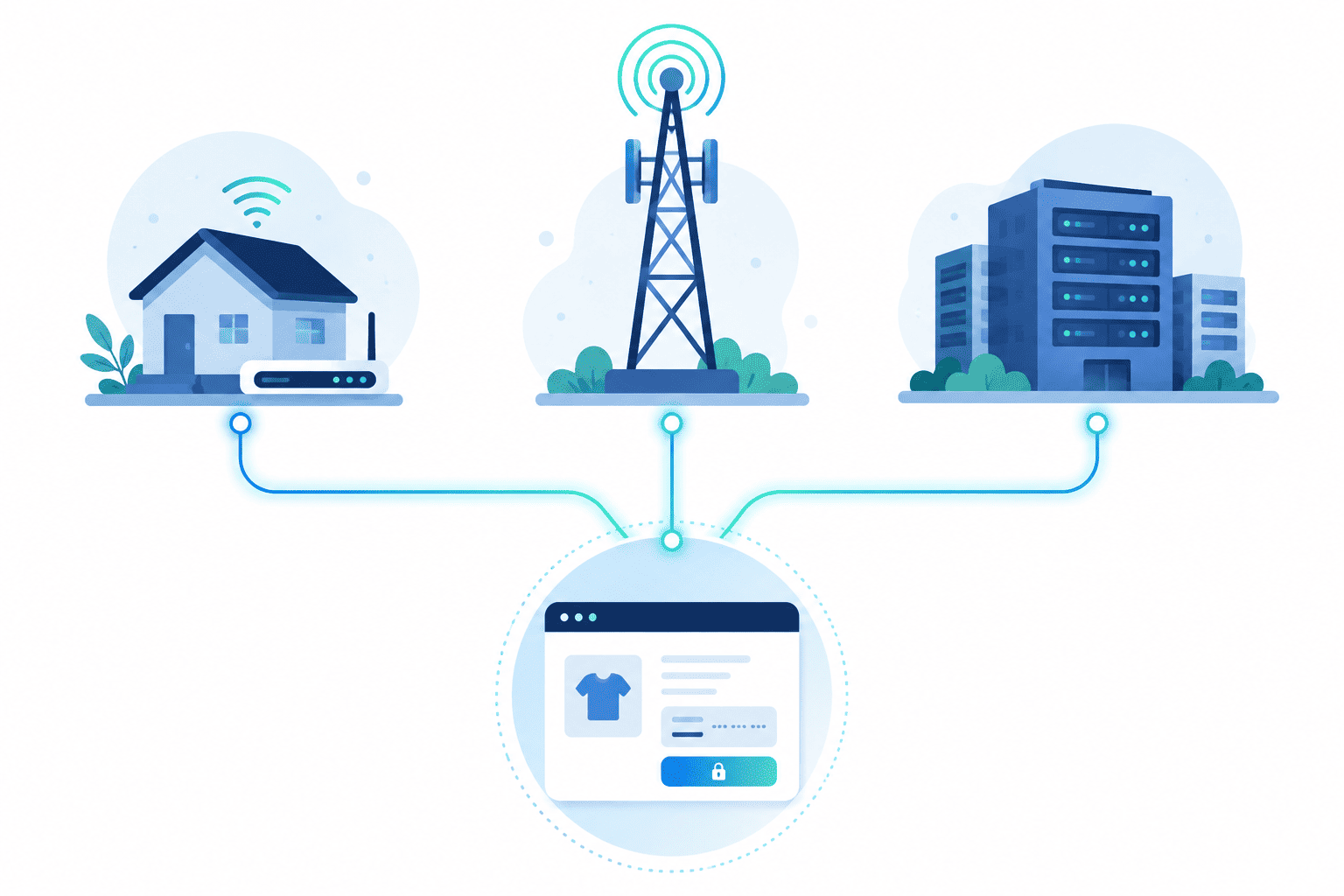
Residential proxies
They route traffic through real IP addresses assigned by real internet service providers to actual homes. They look like genuine shoppers because technically they are tied to real household connections. This makes them the safest option against strict detection systems, but they usually rotate, which can be a problem on sites that need a stable IP to hold a session through checkout.
ISP proxies
They are also called static residential proxies and are the middle ground coppers tend to favour. They are hosted on datacenter-grade infrastructure but registered under residential ISP ranges, so they have the trust score of a home connection with the speed of a datacenter. Because they hold the same IP for the length of a session, they are good for fast-moving checkout flows where losing your IP in the middle of payment means losing the shoes.
Datacenter proxies
They are the fastest and cheapest option, but they are also easiest for retailers to spot since their IP ranges are registered to the hosting companies rather than everyday users. Their role in sneaker copping has narrowed a lot. They still work for account warming, monitoring restock pages, or checking out on smaller, less protected sites, but they quickly get flagged on flagship drops.
Mobile proxies
They run through IPs tied to real mobile carriers. Carrier-grade NAT means thousands of real phones share the same IP, so mobile traffic is naturally hard to block without also blocking legitimate customers. This makes mobile proxies a strong option or the most heavily defended releases, though pool sizes tend to be smaller and cost per IP runs higher.
Proxy Type Comparison for Sneaker Copping
|
Proxy Type |
Detection Risk |
Speed |
Session Stability |
Best Used For |
|
Residential |
Low |
Moderate |
Rotates by default |
High-security drops, account creation |
|
ISP (Static Residential) |
Low |
High |
Stable per session |
Checkout on Shopify, Footsites, SNKRS |
|
Datacenter |
High |
Very High |
Stable |
Monitoring, warming accounts, low-protection sites |
|
Mobile |
Very Low |
Moderate |
Rotates by carrier |
Toughest anti-bot systems, raffle entries |
What Changes From Site to Site
Nike’s SNKRS app is widely considered the hardest release to crack, and it actively blocks datacenter proxies traffic outright, which means that residential or ISP proxies are close to mandatory. Shopify-based drops and many footsites releases are more forgiving. A well-timed ISP or even datacenter proxy can still get through on sites that are not using heavy bot mitigation.
Most of the experienced coppers run a mixed setup rather than betting everything on one proxy type. Residential or mobile proxies handle the sensitive part like security checkouts, while ISP proxies carry the bulk of the fast, time critical checkout tasks. Datacenter proxies get reserved for tasks like monitoring stock or warming accounts, where the speed matters more than staying invisible.
Losing pairs to bad IPs is a fixable problem. Express Nodes offers dedicated and rotating proxies built for exactly this kind of fast, high-volume task, so your setup is ready when the drop goes live.
What to Look for When Choosing Sneaker Proxies
A few things separate a proxy setup that actually converts from one that burns money on release day:
- One IP per task. Reusing an IP across multiple checkout attempts is one of the fastest ways to get every one of those tasks banned at once.
- Location close to the retailer’s server. Proxies based near the store’s hosting region cut latency, and in a race measured in milliseconds, that matters.
- Session persistence. Some queue-based systems need the same IP held for several minutes to keep a task valid, so rotating too fast can cost you a checkout you’d otherwise have won.
- Pool size and freshness. Hyped drops can burn through hundreds of IPs in minutes. A small or recycled pool runs out of clean addresses fast.
- Pay-as-you-go flexibility. Copping is bursty by nature: heavy traffic on drop day, nearly nothing in between. Bandwidth that doesn’t expire is worth more than a fixed monthly plan you barely touch.
Common Mistakes That Cost a Checkout
Even experienced coppers lose pairs to setup errors rather than bad luck. The most frequent ones are running too many tasks on a single IP, choosing datacenter proxies for a site that explicitly blocks them, skipping a latency test before the drop, and underestimating how large a proxy pool a hyped release actually needs. Any one of these can turn a solid bot setup into a wasted release.
Do I need residential proxies for every sneaker site?
No. Sites like Nike SNKRS need residential or ISP proxies because they can block datacenter traffic easily.
Why do coppers prefer ISP proxies over regular residential proxies?
ISP proxies hold a stable IP for the length of a session while still carrying a residential trust score, which matters on checkout flows where losing your IP mid-payment means losing the order.
Is it legal to use proxies for sneaker copping?
Using proxies is legal. Running bots to buy multiple pairs usually breaks a retailer’s terms of service, though, which can lead to canceled orders or account bans, so it’s worth weighing that risk before scaling up
How many proxies do I need for a hyped drop?
It depends on the release, but heavily hyped drops can require hundreds of fresh IPs since each task needs its own clean proxy to avoid instant bans.
Final Thoughts
Sneaker copping in 2026 isn’t about who has the fastest bot anymore. It’s about who has the cleanest infrastructure behind it. ISP proxies have become the go-to for checkout speed without sacrificing trust, residential and mobile proxies still hold the line on the toughest drops, and datacenter proxies play a smaller, supporting role. Building a setup that matches proxy type to the site you’re targeting is what separates a full cart from an empty one.
If you’re setting up for your next release, Express Nodes offers dedicated and rotating proxy options built for exactly this kind of time-sensitive, high-volume task, so your bot has the clean IPs it needs when the drop actually goes live.
If your current proxy setup keeps getting flagged before checkout, it might be time for an upgrade. Express Nodes has residential and ISP options built for time-sensitive drops like this one.
Buy Mobile Proxies: Complete Guide 2026
More than 3 billion people now have a 5G subscription, according to the Ericsson Mobility Report (June 2026). Carriers put thousands of subscribers behind each shared IP address, and websites know it. That is why mobile traffic gets so much room, and why mobile...
How to Test Proxy Speed, Latency & Reliability
Most people pick a proxy, plug it in, and only find out it's bad when their scraper starts failing at 2 a.m. That's actually a really painful way to learn. In Proxyway's 2026 benchmark, residential proxies succeeded about 99% of the time on a simple test page, but the...
Static vs. Rotating Residential Proxies: Which Is Better?
Automated traffic made up more than 53% of all web traffic in 2025, according to Imperva's 2026 Bad Bot Report. Websites know this, and they've gotten strict about who they let in. If your IP looks suspicious, you get a CAPTCHA, a block, or sometimes a quietly fake...