
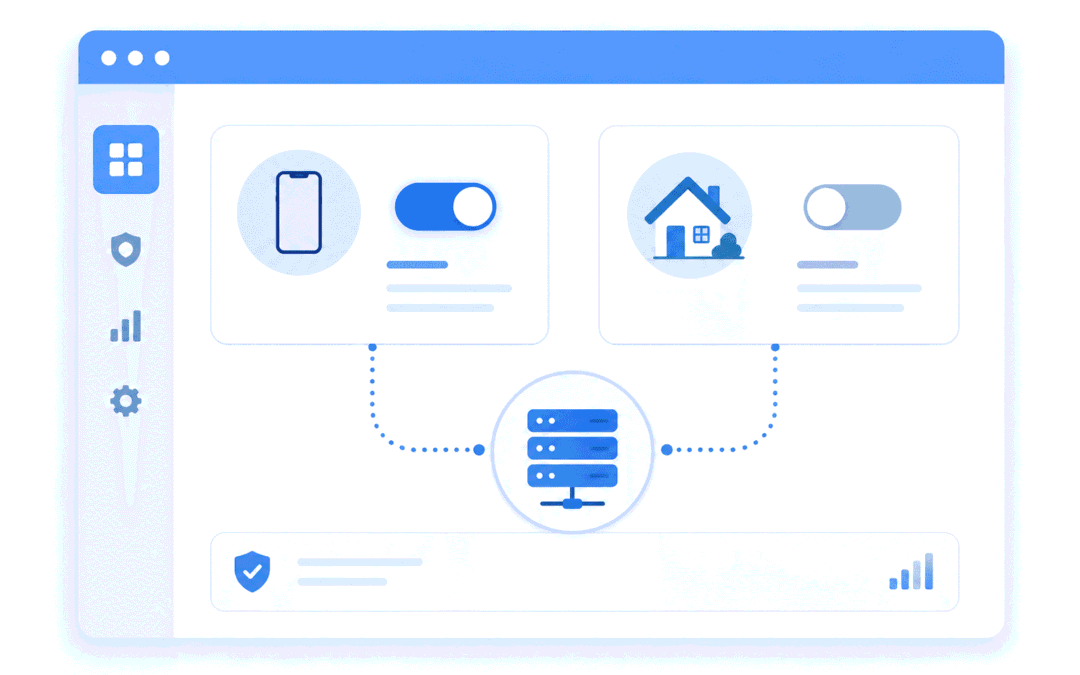
If you’ve spent any time researching different proxies, you’ve probably run into this question more than once. Mobile and residential proxies both promise to make your traffic look real, but they work in completely different ways. If you pick the wrong one, then you may end up burning through your budget or getting your accounts flagged.
Residential proxies now account for 42% of total proxy market revenue, and mobile proxies are the fastest-growing segment, expanding by roughly 35% year over year as more businesses move toward mobile-first data collection (Data Research Tools, 2026). So this isn’t some small decision anymore. It genuinely affects how well your automation, scraping, or account management performs.
Let me quickly tell you more about both of these.
What Is a Residential Proxy
A residential proxy routes your traffic through an IP address that an internet service provider has assigned to an actual real home. Because it looks like a normal household connection, websites treat it the same way they’d treat any real regular visitor.
That’s the reason why residential proxies are so widely used for price tracking, SEO rank checks, and managing business accounts on platforms like Amazon or eBay. Since the IP is connected to a real ISP, it carries a level of trust that datacenter proxies simply can never match.
Are you looking for premium residential and mobile proxies? Then check out Express Nodes
Premium Proxy Infrastructure
Residential Proxies
🏡
Your content goes here. Edit or remove this text inline or in the module Content settings. You can also style every aspect of this content in the module Design settings and even apply custom CSS to this text in the module Advanced settings.
ISP IPs
🏡
Your content goes here. Edit or remove this text inline or in the module Content settings. You can also style every aspect of this content in the module Design settings and even apply custom CSS to this text in the module Advanced settings.
Fresh IPs
🏡
Your content goes here. Edit or remove this text inline or in the module Content settings. You can also style every aspect of this content in the module Design settings and even apply custom CSS to this text in the module Advanced settings.
Dedicated IPs
🏡
Your content goes here. Edit or remove this text inline or in the module Content settings. You can also style every aspect of this content in the module Design settings and even apply custom CSS to this text in the module Advanced settings.
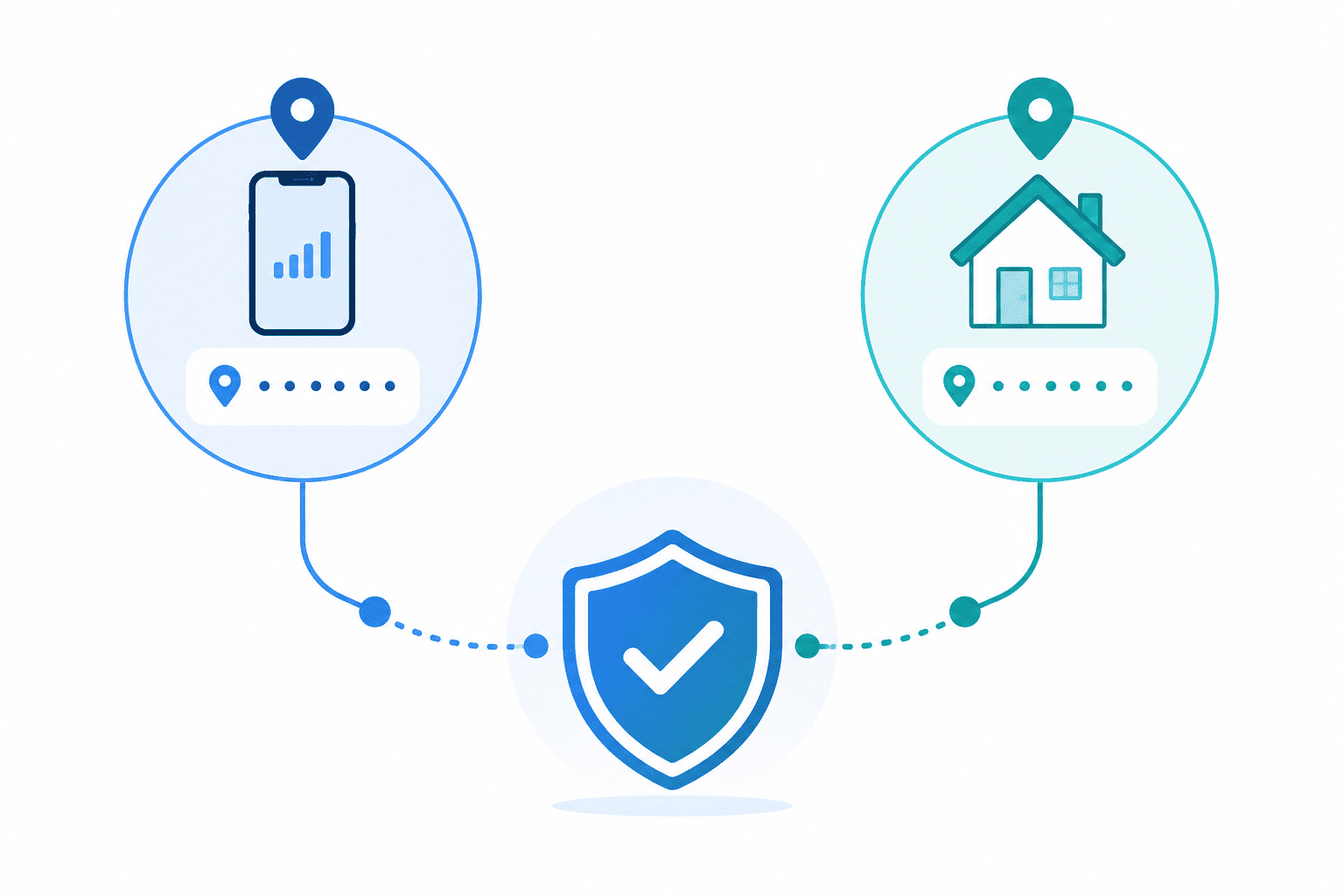
What Is a Mobile Proxy
A mobile proxy works a little differently. Instead of coming from a home router, the IP is assigned by a cellular carrier to a mobile device connected over 4G or 5G. Because of how carrier networks work, dozens or even hundreds of users can share the same IP at once through something called carrier-grade NAT (CGNAT).
This shared IP structure is exactly why mobile proxies are actually very hard to block. A website can’t ban one mobile IP without risking a ban on hundreds of unrelated, legitimate users too. That’s what makes mobile proxies so strong for platforms that watch account behaviour closely, like Instagram or TikTok.
Mobile Proxies vs Residential Proxies: Key Differences
| Factor | Residential Proxies | Mobile Proxies |
| IP source | Home ISPs | Mobile carriers (4G/5G) |
| Trust level | High | Very high |
| Ban resistance | Strong | Strongest, thanks to CGNAT |
| Speed | Depends on the host’s home connection | Generally fast on modern networks |
| Pricing | Usually billed per GB | Often flat-rate, unlimited bandwidth |
| Best for | Scraping, SEO tracking, price monitoring | Social media management, ad verification |
| IP pool size | Very large, broad geographic coverage | Smaller, concentrated in major markets |
When Residential Proxies Make More Sense
If your work involves collecting large volumes of data, residential proxies are usually your best bet. Their pools are massive, so you can rotate through thousands of IPs without hitting the same address too often. This matters a lot for things like:
- Scraping e-commerce listings or competitor pricing
- Tracking search rankings across different cities and countries
- Running ad verification checks at scale
- Managing multiple business accounts where geographic accuracy matters
Residential proxies also tend to offer wider coverage. Since providers work directly with home internet users across nearly every country, you get a lot more location options than most mobile networks can offer.
Check out Express Nodes for premium residential and mobile proxies
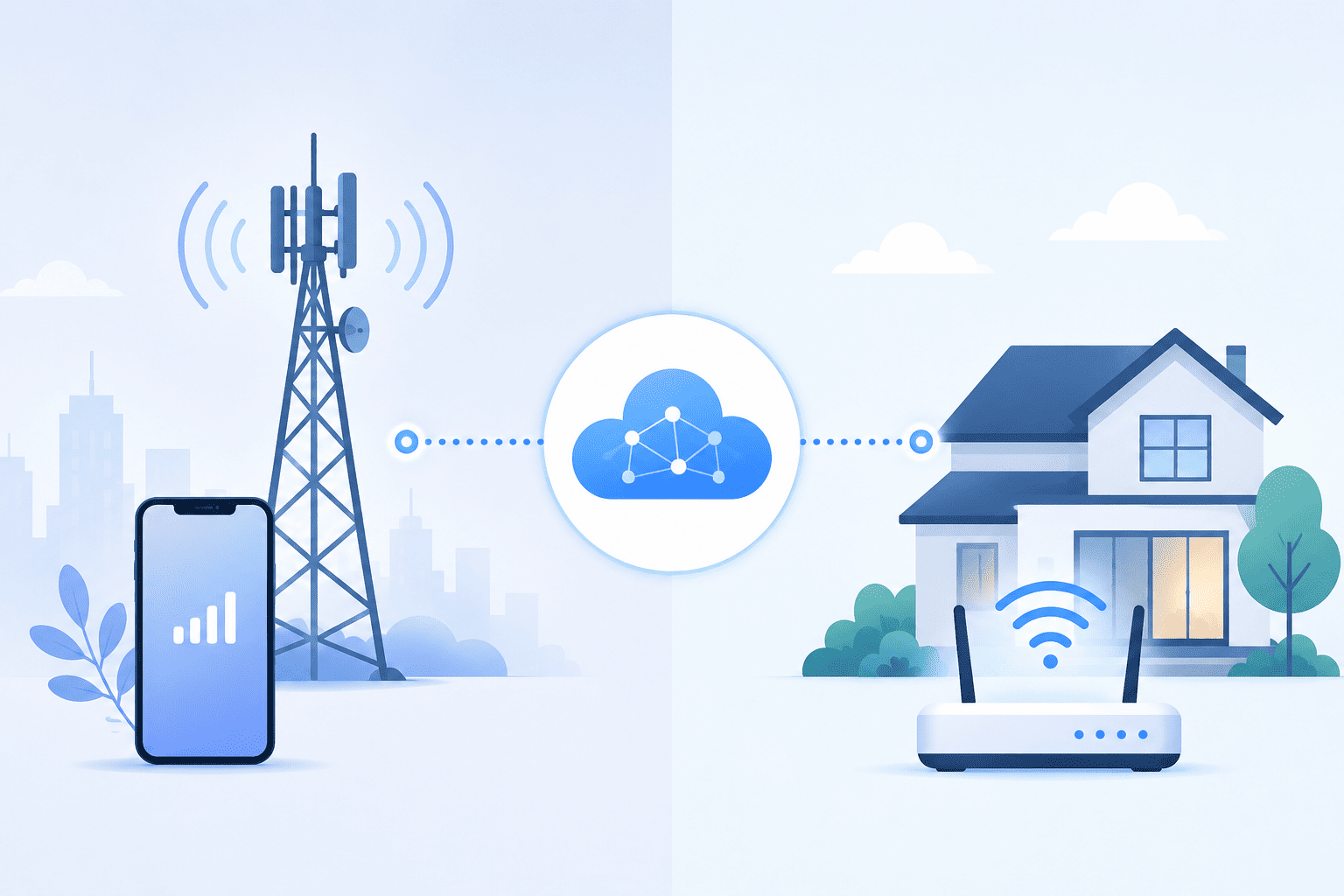
When Mobile Proxies Make More Sense
Mobile proxies are the better call when the platform you’re on is aggressive about spotting anything that doesn’t look like a genuine mobile user. If you’re managing several social accounts, running app-based automation, or checking how your ads render on mobile, mobile proxies give you an edge that residential IPs just can’t fully replicate.
The CGNAT setup is the real advantage here. Because so many users share the same mobile IP, platforms have to be far more careful about issuing bans, since doing so risks locking out genuine customers along with you.
Cost Considerations
Mobile proxies usually cost more. Providers have to maintain physical or virtual devices connected to real SIM cards, and carrier data plans add ongoing costs on top of that. Residential proxies tend to be more budget-friendly and are often billed by data usage rather than a flat monthly fee, which makes them easier to scale when you’re working with high volumes.
If your work leans toward bulk data collection, residential proxies will stretch your budget a lot further. If stealth and account safety matter more to you than saving money, the higher cost of mobile proxies is usually worth it.
Can You Use Both Together
In practice, most businesses don’t pick just one. Teams that scrape data during the day and manage social accounts on the side often run a mix of both, leaning on residential IPs for the heavy data work and switching to mobile IPs whenever account safety becomes the priority.
This is where having a reliable proxy provider actually matters. At Express Nodes, we work with over 9,000 businesses that rely on our residential proxies and static ISP IPs for exactly this kind of flexibility, whether that’s large-scale SEO monitoring or day-to-day account management. Every IP we offer passes through an 8-layer quality check before it ever reaches a customer, so you’re not stuck troubleshooting flagged or recycled addresses down the line.
Are mobile proxies better than residential proxies for social media management?
Yes, in most cases. Mobile proxies use carrier IPs shared by many real users through CGNAT, which makes platforms like Instagram and TikTok less likely to issue a ban.
Why are mobile proxies more expensive than residential proxies?
Mobile proxy providers need physical or virtual devices connected to active SIM cards, plus ongoing carrier data plans, and that adds up fast compared to residential proxies.
Can I use residential proxies for social media accounts instead of mobile proxies?
Yes, you can, and for lower-volume tasks, it often works just fine. But for platforms with strict anti-bot systems, mobile proxies are a safer choice.
Do mobile proxies offer good geographic coverage?
Coverage is improving, but it still trails residential proxies. Mobile networks are strongest in major markets like the US, UK, and Western Europe, while residential proxy pools span far more countries, right down to specific cities.
Is it worth using both mobile and residential proxies at the same time?
For many businesses, yes. Using residential proxies for scraping and research while reserving mobile proxies for account-sensitive tasks gets you the cost efficiency of one and the stealth of the other.
So, Which One Should You Choose?
There’s no single winner here. It really comes down to what you’re trying to do.
Go with residential proxies if you need a large, affordable IP pool for scraping, research, or price tracking. Go with mobile proxies if you’re managing social accounts or working on platforms where getting flagged could cost you real business. And if your work touches both, don’t force one tool to do everything. Let each one do what it’s actually good at.
Not sure which setup fits what you’re building? Talk to our team, and we’ll help you figure out the right mix based on your actual use case, not a generic recommendation.

Best Proxies for Reddit Account Management
If you manage more than one Reddit account, you already know how quickly things can go wrong. One day your posts are getting traction, and the next day your account is shadowbanned, and you have no idea why. Reddit does not take moderation lightly either. In the first...
Sticky Sessions Explained: When You Need the Same IP for Longer
Imagine that you are logged into an Instagram account through a proxy. You post a caption; everything looks fine. Then you refresh the page thirty seconds later, and suddenly you're logged out, or sometimes it's even worse: the account gets flagged for suspicious...
Best Proxies for Sneaker Copping and Limited-Release Drops
A hyped release goes live. You refresh, you click, and the size you wanted is gone before the page even finishes loading. That's not bad luck. Nike alone says its SNKRS app fields an average of 12 billion bot calls a month, with bots making up anywhere from 10% to 50%...