

If you have ever tried scraping data, managing multiple social media accounts, or doing any kind of automation work online, you must have faced this kind of problem before. Either your IP may have been blocked, your session timed out, or the platform just flagged you as suspicious. I know it’s quite frustrating and most of the time, the problem isn’t your tool or your setup. It’s the type of proxy that you’re using.
According to the 2026 State of AI Traffic & Cyberthreat Benchmark Report. It highlights that automated and AI-driven traffic is growing eight times faster than human traffic, making up a massive majority of overall web activity. Due to which websites are getting smarter and more aggressive about detecting non-human behavior. So if you’re still relying on the basic datacenter proxies and wondering why they keep on getting blocked, ISP proxies might be exactly what you need. In this blog, we’ll break down what ISP proxies are, how they work, how they’re different from residential proxies, and when you should actually use them.
What Is an ISP Proxy?
An ISP proxy, also called a static residential proxy is basically a hybrid. It has the speed of a datacenter proxy and it combines it with the legitimacy of a residential IP address.
Here’s what this means in simple terms the IP address you get is registered with a real Internet Service Provider (ISP). So when a website checks your IP it sees what looks like a normal home internet user, nothing suspicious. But unlike a traditional residential proxy, it’s not actually routing through someone’s home device. It’s hosted on fast, reliable datacenter.
So you get:
- A residential-looking IP (less likely to be flagged or blocked)
- Datacenter-level speed and stability
- A static IP that doesn’t change between sessions
That’s why people often call them static residential proxies. The word static means that the IP stays the same. It won’t rotate unless you specifically want it to rotate.
Are you looking for premium ISP proxies? Then check out Express Nodes
Premium Proxy Infrastructure
Residential Proxies
🏡
Your content goes here. Edit or remove this text inline or in the module Content settings. You can also style every aspect of this content in the module Design settings and even apply custom CSS to this text in the module Advanced settings.
ISP IPs
🏡
Your content goes here. Edit or remove this text inline or in the module Content settings. You can also style every aspect of this content in the module Design settings and even apply custom CSS to this text in the module Advanced settings.
Fresh IPs
🏡
Your content goes here. Edit or remove this text inline or in the module Content settings. You can also style every aspect of this content in the module Design settings and even apply custom CSS to this text in the module Advanced settings.
Dedicated IPs
🏡
Your content goes here. Edit or remove this text inline or in the module Content settings. You can also style every aspect of this content in the module Design settings and even apply custom CSS to this text in the module Advanced settings.

How Do ISP Proxies Actually Work?
When you connect through an ISP proxy, your traffic is routed through an IP address that’s been assigned to you by an ISP provider. But instead of that IP being connected to someone’s laptop or someone’s home router, it’s actually sitting on a server in the data center.
From the website’s perspective, your request it look like it is coming from a regular residential internet user. The IP has a real ASN (Autonomous System Number), which is basically an identifier that tells the websites that this IP belongs to a residential ISP. Websites trust those IPs more with an ASN number but they don’t trust datacenter IPs the same way.
ISP Proxies vs Residential Proxies: What’s the Difference?
This is where most people get confused. Both of the types involve ISPs, look residential, so what’s actually different between them?
Residential Proxies:
- Route traffic through real devices, actual people’s phones and laptops
- IPs rotate frequently with each request or session
- Great for scraping at scale because of huge IP pools
- Slower and less stable since they rely on real home connections
- Better at mimicking actual human behavior
ISP Proxies (Static Residential):
- Hosted on datacenter servers, not real devices
- IP stays the same static, doesn’t rotate unless you ask it to
- Faster and more reliable connection
- Smaller IP pools compared to rotating residential
- Better for tasks that require a persistent identity
So basically, if you need to stay logged in somewhere for a long time or maintain the same identity across sessions, ISP proxies are a better choice for you. If you’re doing heavy scraping across thousands of pages and need anonymity through sheer volume, rotating residential proxies are great for you.
Neither of these is universally better. It just depends on your use case.
Take a look at the premium ISP proxies of Express Nodes
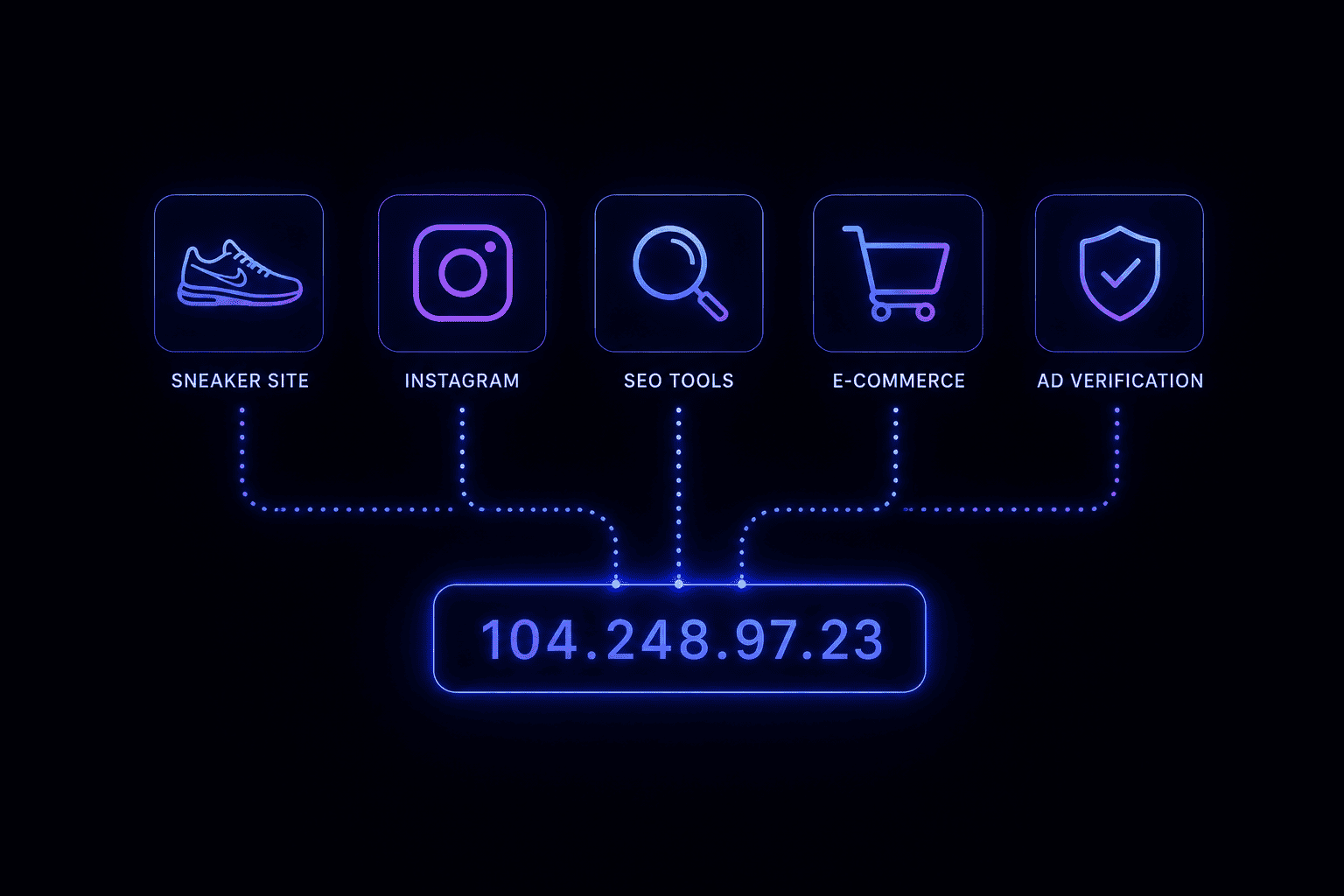
When Should You Use ISP Proxies?
- Social media account management
If you’re managing multiple social media accounts like Instagram, TikTok, or Twitter accounts, you need IPs that look like real humans and stay consistent. Rotating IPs is a big red flag in this case because platforms switching IPs mid-session look really suspicious. ISP proxies give you a stable identity per account.
- Sneaker bots and limited releases
Speed matters in this space a lot. Datacenter proxies are fast but get blocked instantly on sneaker sites. Rotating residential proxies can be too slow for this job. ISP proxies hit that sweet spot fast enough to checkout and trusted enough not to get flagged.
- SEO monitoring
Tracking keyword rankings from different locations requires a consistent IP from that region. ISP proxies let you monitor search results from specific geographic ISPs without getting detected or served inconsistent results.
- Account logins and e-commerce operations
If you’re managing an Amazon store, running ads, or accessing any platform that monitors login patterns, a rotating IP will trigger security checks. A static ISP proxy keeps your login identity clean and safe.
- Ad verification
Brands and agencies use proxies to verify that their ads are appearing correctly in different regions and countries. ISP proxies make this more reliable since they mimic real users in specific locations.
What Are the Limitations of ISP Proxies?
ISP proxies are not perfect. Here are a few things which you should keep in mind:
- Smaller IP pools Since these IPs have to be sourced from actual ISPs, the total pool is much smaller than rotating residential networks. This is a real limitation if you’re doing high-volume scraping.
- Subnet blocking ISPs assign IPs in blocks called subnets. If one IP from a subnet gets flagged, some platforms will block the entire range. So if you’re sharing a proxy pool with others, one person’s bad behavior can affect you.
- Not ideal for massive scraping For projects where you need millions of IPs or constant rotation, rotating residential proxies are still the better option for you.
What is an ISP proxy?
An ISP proxy is an IP address registered with a real Internet Service Provider but hosted on a fast datacenter server. It looks just like a normal home internet user to websites, which makes it more difficult to identify and block it.
What's the difference between ISP proxies and residential proxies?
Residential proxies route traffic through real home devices and rotate frequently. ISP proxies are hosted on servers and stay fixed. Residential proxies are better for high-volume scraping and ISP proxies are better when you need a stable identity like managing multiple social media accounts or monitoring rankings.
Are ISP proxies good for Instagram or social media?
Yes ISP proxies are one of the better options for managing social media accounts. Platforms like Instagram track IP changes as suspicious behavior. A static ISP proxy gives each of your accounts a consistent identity, which reduces the overall risk of getting flagged or banned.
Why do ISP proxies have smaller IP pools than residential proxies?
Because ISP proxy IPs have to be sourced from real ISPs, this limits how many are available. Rotating residential proxies pull from networks of real user devices, which can include millions of IPs. ISP proxy pools are smaller but more controlled and typically cleaner.
Can ISP proxies get banned?
Yes, they can but the ban rate is generally lower than that of datacenter proxies. The biggest risk is subnet blocking, where a platform flags an entire IP range if one IP misbehaves. Choosing a provider with dedicated not shared ISP IPs reduces this risk significantly.
How Express Nodes Can Help
If you’re looking for reliable ISP proxies that are actually super clean and high quality, Express Nodes is worth checking out. Their proxy service offers static residential proxies with strong ISP authentication, low ban rates, and fast response times which is honestly what matters the most when you’re running any kind of automation or account management.
Whether you’re just getting started with proxies or you’re scaling up operations, having a trustworthy ISP proxy provider makes a huge difference. You can explore their offerings at Express Nodes or check out their proxy pricing page to find a plan that fits.
How to Hide Your IP Address: Proxies vs VPNs vs Tor
About 23% of internet users aged 16 and over said they used a VPN in the second quarter of 2025, based on GWI survey data in the Digital 2026 Global Overview Report. That's nearly one person in four online, and most of them want the same thing, which is to stop...
How to Set Up a Proxy in Chrome: Complete Guide
Chrome accounted for 69.39% of worldwide browser market share in August 2026, according to Statcounter Global Stats. That's a lot of people who will eventually want to browse from a different IP address. So if you want your browsing to go through a proxy, you will...

How to Check if a Proxy Is Working: 7 Easy Methods
The global proxy server market is projected to grow from $1.746 billion in 2025 to $2.649 billion by 2031, a 7.2% CAGR driven mainly by rising cybersecurity needs and demand for geo-restriction bypass. A lot of that growth is actually coming from businesses scraping...