
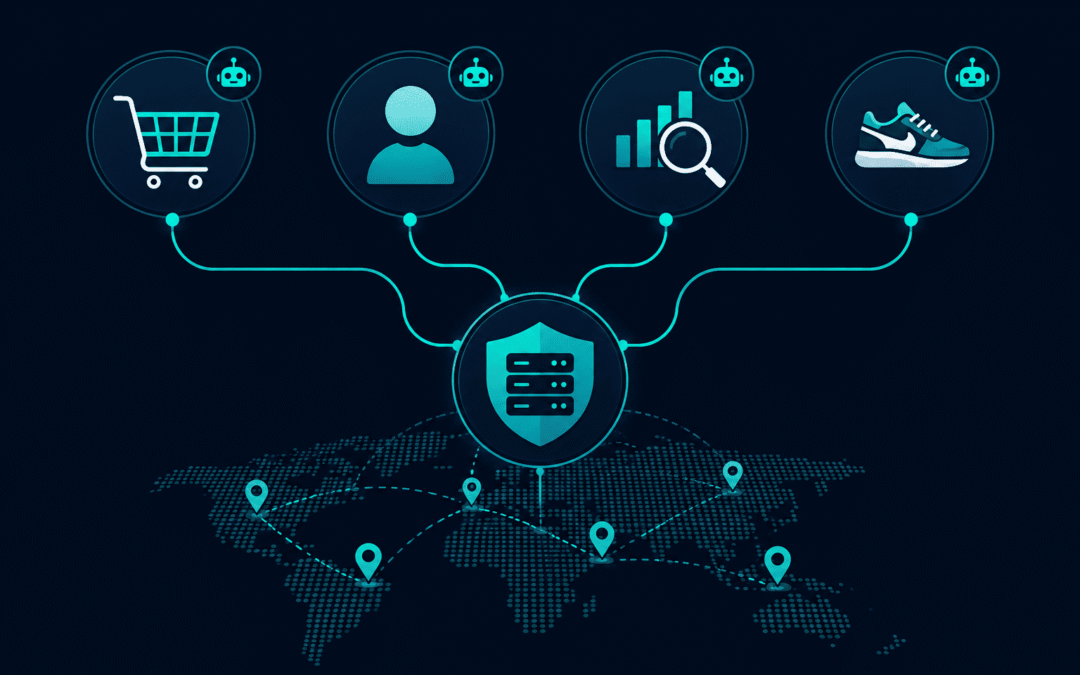
If you’ve been shopping around for proxies, you’ve probably noticed that ISP proxies and residential proxies sound almost identical on paper. Both give you a residential-looking IP. Both help you avoid bans. Both are used for scraping, social media, and automation. So let’s understand what’s actually different between both of them and does it even matter which one you pick?
The proxy market is growing fast it is valued at around $1.9 billion in 2026 and expected to hit $2.6 billion by 2031, according to Knowledge Sourcing Intelligence. In today‘s time many of the businesses depend on proxy infrastructure for data collection, ad verification, and competitive research. If you are picking the wrong type of proxy it can lead to slower performance, higher block rates, or a complete waste of money. This guide breaks down exactly how ISP proxies and residential proxies differ, where each one performs the best, and how to choose the right one for your specific use case.
What Are ISP Proxies?
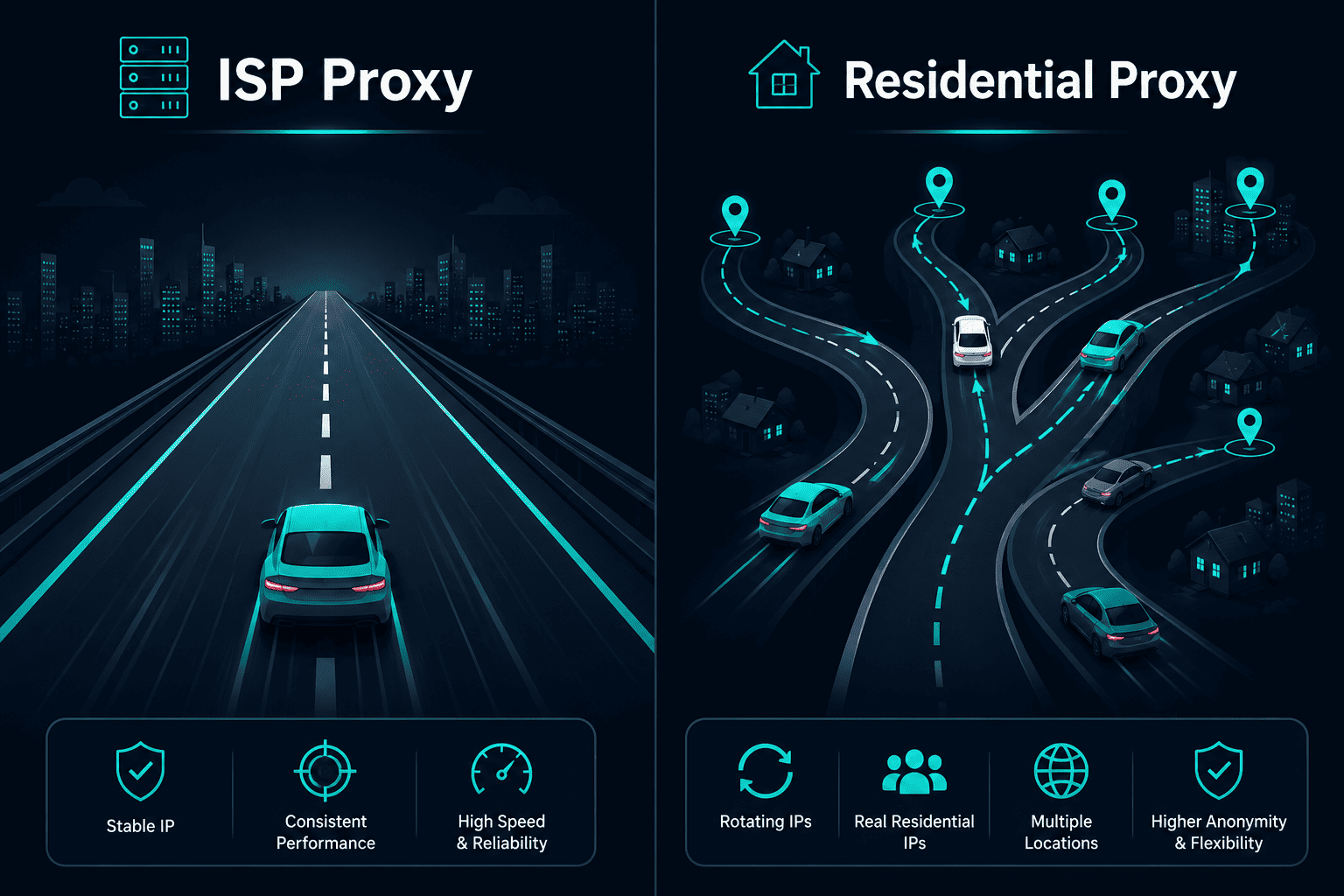
ISP proxies, also called static residential proxies, are IP addresses that are registered under real internet service providers but they’re actually hosted on data center servers. So traffic going through an ISP proxy leaves a data center, but the IP that shows up on the target website looks like it belongs to a regular household internet connection.
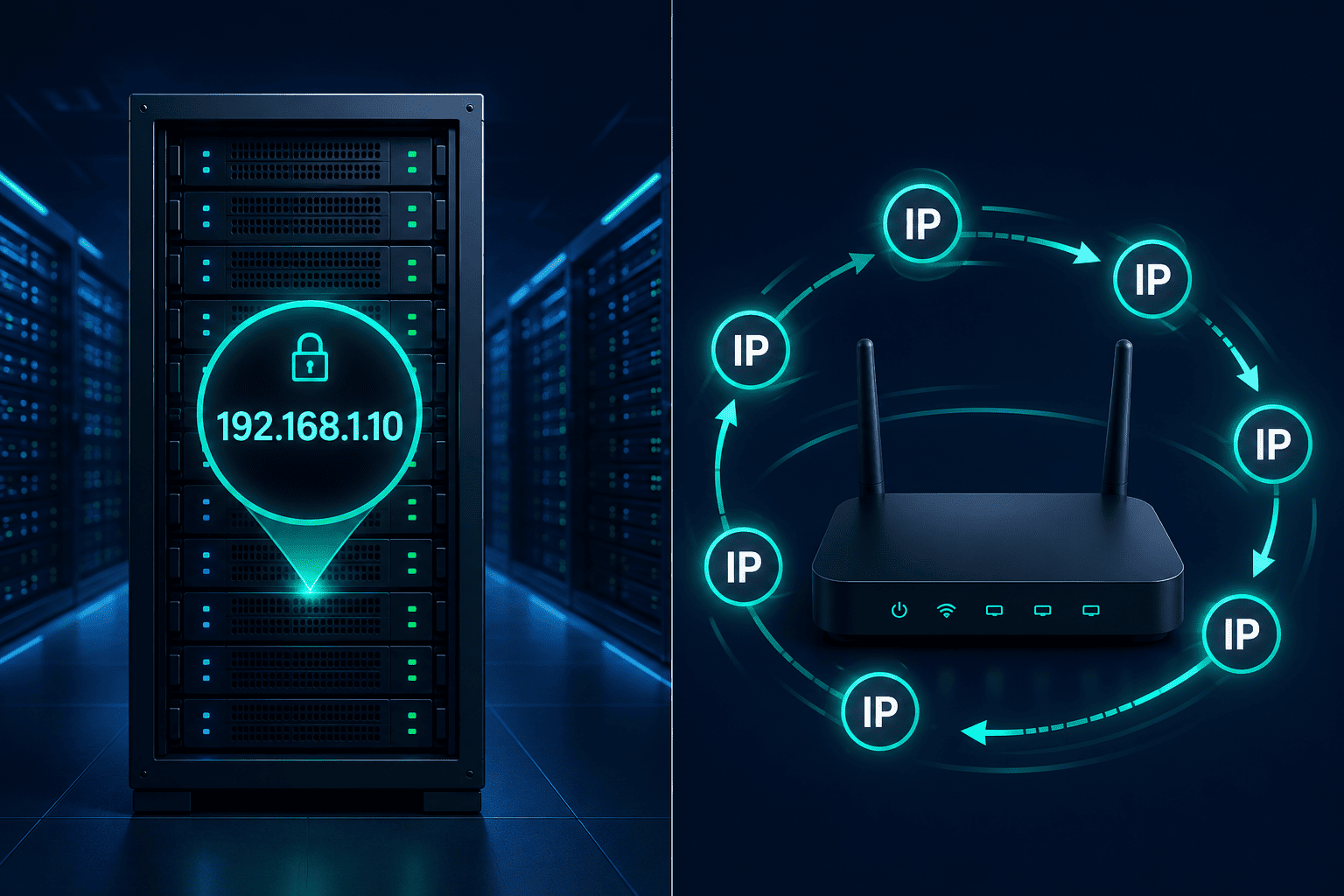
The key thing about ISP proxies is that the IP stays the same. You get one static IP address that doesn’t change between sessions. That’s the whole point of them. You’re not rotating. You’re not jumping between different IPs. You’re building a consistent identity that websites can recognize and trust over time.
This makes ISP proxies (also called dedicated ISP proxies or static ISP proxies) really useful for tasks where continuity matters like managing accounts, running long automation sessions, or any workflow where getting flagged mid-session would cause actual problems.
Looking for premium ISP or Residential proxies? Then check out Express Nodes
Premium Proxy Infrastructure
Residential Proxies
🏡
Your content goes here. Edit or remove this text inline or in the module Content settings. You can also style every aspect of this content in the module Design settings and even apply custom CSS to this text in the module Advanced settings.
ISP IPs
🏡
Your content goes here. Edit or remove this text inline or in the module Content settings. You can also style every aspect of this content in the module Design settings and even apply custom CSS to this text in the module Advanced settings.
Fresh IPs
🏡
Your content goes here. Edit or remove this text inline or in the module Content settings. You can also style every aspect of this content in the module Design settings and even apply custom CSS to this text in the module Advanced settings.
Dedicated IPs
🏡
Your content goes here. Edit or remove this text inline or in the module Content settings. You can also style every aspect of this content in the module Design settings and even apply custom CSS to this text in the module Advanced settings.
What Are Residential Proxies?
Residential proxies work differently. These are IP addresses assigned to real devices like someone’s home laptop, smartphone, or desktop by their actual internet provider. When you use a residential proxy, your traffic gets routed through that real person’s connection.
Because the traffic genuinely comes from a real person device, websites naturally see it as organic user behavior. That’s why residential proxies have always been trusted for high detection risk tasks.
The other thing about the residential proxies is that they rotate. Usually it changes on every request or sometimes after a set period of time, it totally depends on how you’ve set things up. That constant IP rotation makes it really hard to block them, because the target website never sees the same IP twice in a row.
If you’ve already heard terms like rotating residential proxies or rotating proxies for scraping, that’s exactly what this refers to. The rotation is the feature.
ISP Proxies vs Residential Proxies: The Key Differences
Here’s where it gets practical.
IP Source
ISP proxies are based on the infrastructure. The IP is registered to an ISP, but the actual server is sitting in a data center. Residential proxies are peer-based the IP actually belongs to a real device on a home network.
This distinction matters because strict antibot systems can sometimes detect that an ISP proxy’s behavior is like they have near-perfect uptime, consistently fast speeds that don’t quite match what a normal home connection looks like. Residential proxies don’t have this problem because they literally are home connections.
Static vs Rotating
This is the clearest difference between the two. ISP proxies give you a static IP, same IP address on every session. Residential proxies give you rotating IPs, a different IP address on every request or after every few minutes.
If your task requires a persistent session like warming up on a social media account or logging into a platform repeatedly, static is exactly what you need. If your task involves sending thousands of requests to the same site like scraping data, rank tracking, or price monitoring, rotating is exactly what you need because it keeps you undetected.
Speed and Reliability
ISP proxies are faster and more stable. Since they’re hosted on data center infrastructure, you get consistent speeds and close to 100% uptime. Residential proxies depend on real user devices, which means speeds can vary. The person on the other end might have a slow connection, or their device might go offline.
For time-sensitive tasks, ISP proxies have an edge here.
Pool Size
This is where residential proxies win significantly. A typical residential proxy network has millions of IPs across hundreds of countries. ISP proxy pools are comparatively small. If a target site starts blocking IP ranges, which does happen sometimes, a small ISP pool can become a problem faster than a large residential network would.
Cost
ISP proxies are generally priced per IP per month. Residential proxies are often billed per GB of data used. Depending on your usage, one pricing model might be significantly cheaper than the other. For low-volume, long-session tasks, ISP proxies often work out better. For high-volume, high-rotation tasks, the per-GB model of residential proxies can be more cost-efficient.
Take a look at the premium ISP and residential proxies of Express Nodes
When to Use ISP Proxies
ISP proxies (static residential proxies) are the better choice when you need stability and a consistent identity. Here are some real use cases:
Social media account management
Platforms like Instagram and TikTok get suspicious when an account’s IP keeps changing. A static ISP proxy gives an account a consistent home location.
Account warming
If you’re building up a new account’s activity slowly over time, you don’t want the IP to shift. ISP proxies hold their address.
Ad verification
Checking that ads display correctly in specific regions requires a stable, trusted IP. ISP proxies are fast enough to run these checks efficiently.
SEO monitoring at low volume
Tracking a smaller keyword set from fixed locations is often cheaper and more reliable with ISP proxies than paying per GB with residential.
When to Use Residential Proxies
Buying rotating residential proxies makes more sense if you’re doing anything at volume like when you need IP diversity and stealth. Here are some of the use cases:
Web scraping at scale
Large-scale data collection from sites with aggressive anti-bot systems needs a constant supply of fresh IPs. A residential proxy network with millions of IPs is much harder to block systematically.
Sneaker bots and Shopify
These platforms see thousands of requests simultaneously and flag repeated IPs fast. Residential proxies for sneaker bots work because each checkout attempt comes from a different IP.
High-volume SEO rank tracking
Monitoring hundreds of keywords across multiple search engines generates a lot of requests. Rotation handles this better than a small static pool.
Amazon and e-commerce scraping
Residential proxies for Amazon scraping are popular because Amazon’s detection systems are among the most aggressive. The diversity of IPs from a residential network keeps things running.
Can I Use Both?
Yes, and a lot of teams actually do. If you’re running multiple types of workflows, some work that needs stability, some work that needs rotation, using ISP proxies for the account-based work and residential proxies for the scraping work is genuinely the most efficient setup.
The proxy you choose should match the task, not just the budget.
Buy now premium residential and ISP proxies only at Express Nodes
How to Check if a Proxy Is Working: 7 Easy Methods
The global proxy server market is projected to grow from $1.746 billion in 2025 to $2.649 billion by 2031, a 7.2% CAGR driven mainly by rising cybersecurity needs and demand for geo-restriction bypass. A lot of that growth is actually coming from businesses scraping...

Best Proxies for Web Scraping in 2026: What Should You Use?
According to reports from Apify and The Web Scraping Club industry survey, 65.8% of web scraping professionals used more proxies in 2025 than the previous year, and 58.3% increased their proxy budgets over the same period, even as proxy prices generally fell. That...
Best Proxies for Google Search and SERP Tracking
If you have ever tried to check your Google rankings by just searching your keyword yourself, you already know the problem. Google has publicly confirmed it processes more than 5 trillion searches every year, about 13.7 billion a day. Google shows you results based on...