

Amazon changes prices on its platform roughly 2.5 million times a day, according to price intelligence firm Profitero, compared to around 50,000 monthly price changes each for competitors like Best Buy and Walmart. That number alone explains why manual price checks stopped being a viable strategy years ago. If a competitor can reprice within minutes of a demand shift, and you are still checking their listings by hand once a week, then you are not competing on price; you are just guessing at it.
This is why price monitoring has become one of the most common use cases of proxies in e-commerce. Brands, marketplaces, and repricing tools all need a steady, accurate stream of competitor pricing data, and the only realistic way to collect that data at scale is through automated scraping backed by a solid proxy infrastructure. This guide breaks down why proxies are necessary for this use case, which proxy types actually work, and how to set up a price monitoring system that will not collapse the moment a target site updates its bot defenses.
Why E-commerce Brands Need Automated Price Monitoring
Dynamic pricing has gone from a niche airline tactic to a default expectation across online retail. The dynamic pricing software market is projected to grow from $3.49 billion in 2025 to $4 billion in 2026, and roughly 40% of online retailers now use some form of automated pricing. When done well, dynamic pricing can lift revenue by 2 to 5% and margins by 5 to 10%, according to benchmarks widely cited from McKinsey research.
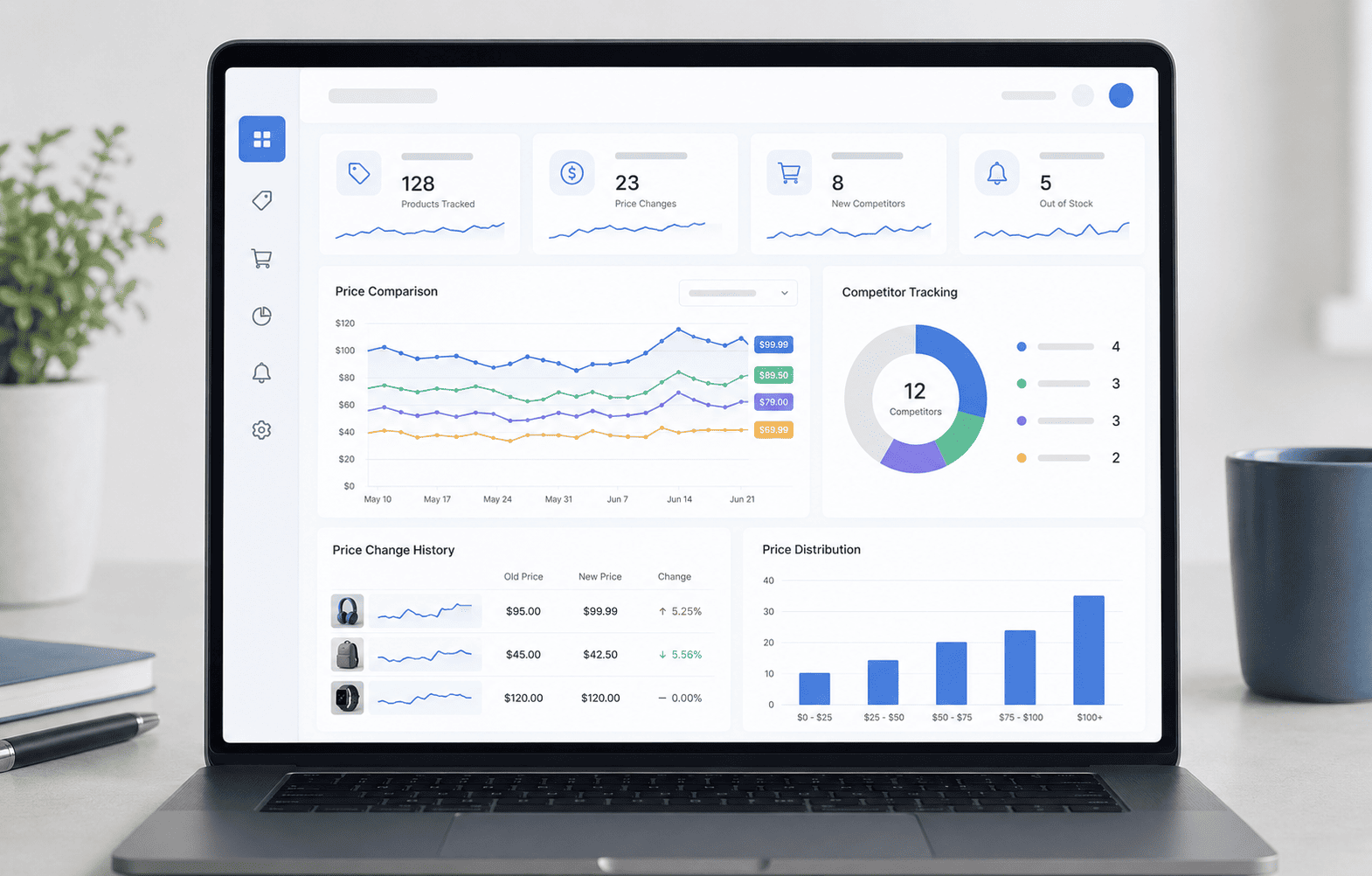
None of that works without a data feed. A repricing engine is only as good as the competitor prices it’s reacting to, and that means someone has to check those prices continuously, often across hundreds or thousands of SKUs, across multiple competitor sites, multiple times a day.
Manually visiting competitor pages doesn’t scale past a handful of products. So the job falls to scrapers. And scrapers immediately run into the same problem again: the sites they are checking don’t want to be scraped.
Need proxies that don’t get blocked mid-scrape? See Express Nodes’ plans built for e-commerce price monitoring.
Premium Proxy Infrastructure
Residential Proxies
🏡
Your content goes here. Edit or remove this text inline or in the module Content settings. You can also style every aspect of this content in the module Design settings and even apply custom CSS to this text in the module Advanced settings.
ISP IPs
🏡
Your content goes here. Edit or remove this text inline or in the module Content settings. You can also style every aspect of this content in the module Design settings and even apply custom CSS to this text in the module Advanced settings.
Fresh IPs
🏡
Your content goes here. Edit or remove this text inline or in the module Content settings. You can also style every aspect of this content in the module Design settings and even apply custom CSS to this text in the module Advanced settings.
Dedicated IPs
🏡
Your content goes here. Edit or remove this text inline or in the module Content settings. You can also style every aspect of this content in the module Design settings and even apply custom CSS to this text in the module Advanced settings.
Why You Can’t Just Scrape Prices Without Proxies
E-commerce sites, especially large marketplaces, have strong financial incentives to block price-scraping bots. Pricing data is their competitive intelligence too, and letting competitors track it freely for free undercuts their own strategy. So they invest heavily in anti-bot systems.
Recent industry data gives a sense of scale here. Bots now account for close to half of all global internet traffic, and even sophisticated bot traffic isn’t hard for modern defenses to catch. One bot security report found that most tested websites failed to block advanced anti-fingerprinting bots, which is why detection systems keep escalating in complexity. On the other side, when scraping attempts do get flagged, the volume can be really big.
The tools defending e-commerce sites typically have several layers:
- IP-based rate limiting — too many requests from one IP address in a short window trigger a block
- Browser and TLS fingerprinting — detecting non-human patterns in how a request is made, not just where it comes from
- CAPTCHA challenges — inserted when behavior looks automated
- Session and behavioral analysis — flags requests that don’t move through a site the way a real shopper would
- Geo and header mismatches — catching requests where the IP location doesn’t match the browser’s claimed language or timezone
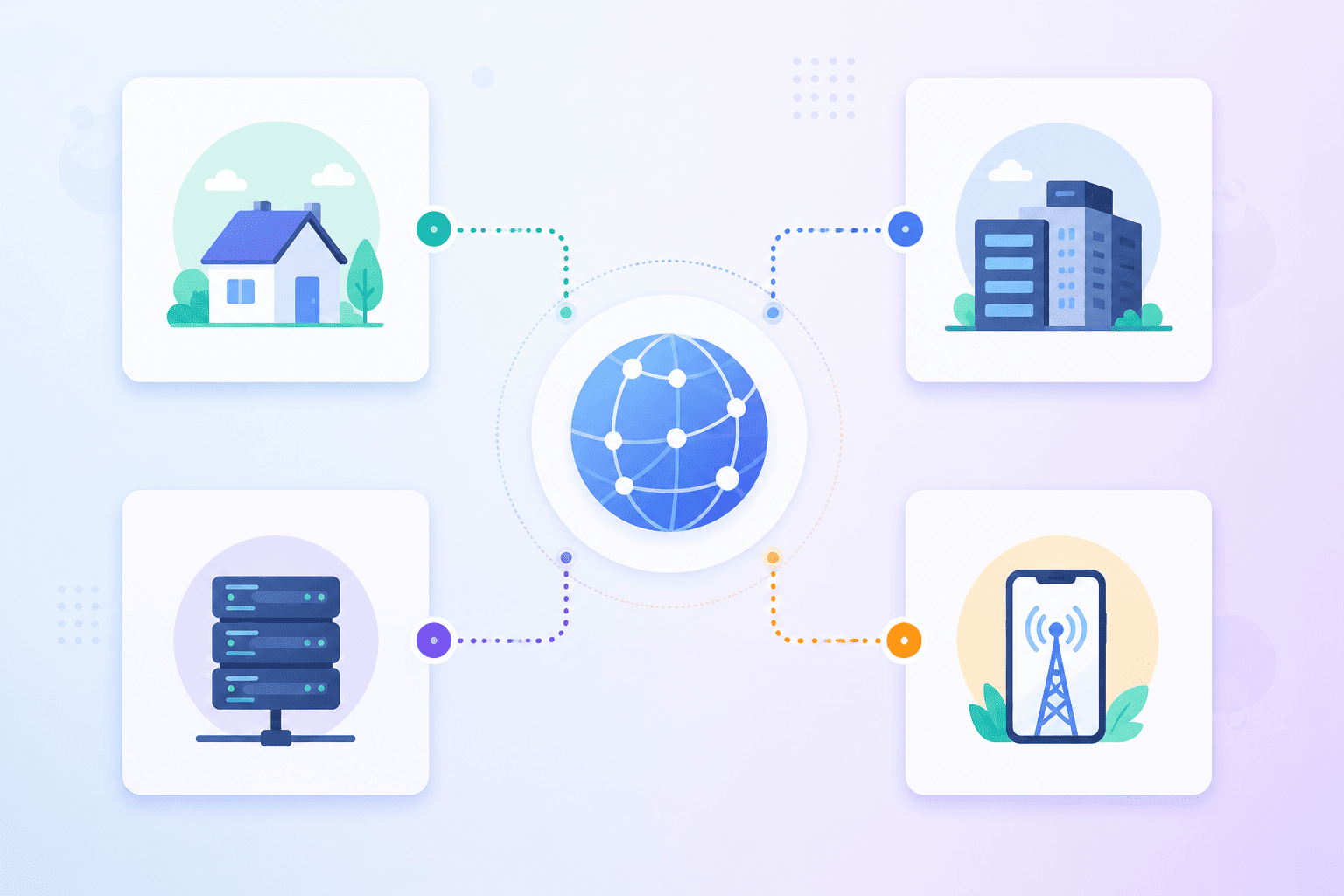
A single IP address, even a fast one, gets caught by the first layer alone. This is the core reason proxies exist in a price monitoring stack: they let you distribute requests across many IP addresses so no single address ever looks suspicious, while pairing that distribution with the right technical setup to look like ordinary traffic.
The Proxy Types That Actually Work for Price Monitoring
Not all proxies are equal for this job. Here’s how the main types stack up specifically for competitor price tracking.
| Proxy Type | Best For | Trust Level | Speed | Typical Cost |
|---|---|---|---|---|
| Residential | High-security retail sites, Amazon, Walmart | High | Medium | High |
| ISP (Static Residential) | Repeated checks on the same listings over time | High | Fast | Medium-High |
| Datacenter | High-volume checks on lightly protected sites | Low-Medium | Very Fast | Low |
| Mobile | Sites that heavily scrutinize desktop traffic | Very High | Medium | Highest |
| Rotating Residential | Large-scale, multi-site monitoring at scale | High | Medium | Medium-High |
Residential proxies route traffic through real ISP-assigned IP addresses tied to actual households, so they look like ordinary shoppers to the target site. They are the default choice for monitoring major marketplaces with aggressive anti-bot systems, since a residential IP carries far less inherent suspicion than a known datacenter range.
ISP proxies combine the trust of a residential IP with the stability of a datacenter connection. Because the IP doesn’t rotate on every request, they work well when you need to track the same product listing repeatedly over hours or days without breaking session continuity, something that matters if a site is watching for consistent behavior over time.
Datacenter proxies are the fastest and cheapest option, but they are also the easiest for anti-bot systems to flag, since their IP ranges are publicly known to belong to hosting providers rather than real users. But they are good for lower-security targets or for scraping your own listings and smaller competitors that don’t run heavy bot protection.
Mobile proxies route through IPs assigned to actual mobile carriers. Because carrier IPs are shared across huge numbers of real users, sites are reluctant to block them outright for fear of blocking legitimate customers along with the bot traffic. They are the most expensive tier but also the hardest to get flagged.
Rotating residential proxies cycle through a large pool of residential IPs automatically, distributing requests so no address ever approaches a rate limit. For a brand monitoring hundreds of SKUs across multiple competitor sites daily, this is usually the practical default, since it balances scale with the trust benefits of residential IPs.
Track competitor prices without the IP bans. Check out Express Nodes’ residential proxy plans.
Setting Up a Price Monitoring Pipeline That Doesn’t Get Blocked
Choosing the right proxy type is only half the job. The other half is how you use it. A few practices consistently reduce block rates in production environments:
Match session behavior to a real shopper. Use the same residential IP for the full duration of a browsing session instead of rotating it mid-session, and keep the browser’s user-agent, timezone, and language headers consistent with the proxy’s actual geographic location.
Space out requests. Scraping the same competitor catalog every few seconds is a fast way to trip rate limits. Spreading requests across off-peak hours and adding realistic delays between page loads keeps traffic patterns closer to normal browsing.
Geo-target deliberately. If you’re tracking prices shown to shoppers in a specific country or city, your proxy’s IP location needs to match, since many e-commerce sites serve region-specific pricing and promotions.
Rotate proxies at the right layer. Rotate between sessions, not within them, and rotate across a large enough pool that no single IP accumulates a suspicious request history.
Monitor your own success rate. A dropping success rate on a given target is usually the first sign that an anti-bot system was recently updated, and catching that early prevents a data gap from reaching your repricing engine.
Is Scraping Competitor Prices Legal?
This comes up in nearly every conversation about price monitoring, so it’s worth addressing directly. In the US, the landmark case here is hiQ Labs v. LinkedIn, where the Ninth Circuit Court of Appeals ruled that scraping publicly available data does not violate the Computer Fraud and Abuse Act, since there’s no unauthorized access when the data in question is visible to anyone without logging in. That principle has since been reinforced in other rulings, including a 2024 case involving Meta’s platforms.
In practice, this means: publicly visible product prices, the kind you can see in an incognito browser without an account, are generally fair game to collect. Product prices aren’t personal data, so GDPR concerns are minimal for this specific use case in the EU as well.
Where things get riskier isn’t the scraping itself but how it’s done. Creating fake accounts, logging in to access gated pricing, or violating a site’s terms of service can still expose a company to breach-of-contract claims, even if the CFAA doesn’t apply. The safest practice for competitor price monitoring is to stick to publicly accessible pages, avoid logging in, respect reasonable rate limits so you’re not overloading a competitor’s servers, and keep documentation of what data you collect and why.
Choosing the Right Setup for Your Business
The right proxy mix depends on scale and target difficulty, not just budget. A brand tracking 20 competitor products on smaller D2C sites can often get by with datacenter or standard residential proxies. A brand tracking hundreds of SKUs across Amazon, Walmart, and other major marketplaces needs rotating residential or mobile proxies paired with session management, since the anti-bot investment on those platforms is significantly higher.
It’s also worth separating “can we technically collect this data” from “should we build and maintain this ourselves.” Managing proxy pools, rotating IPs, and adapting to anti-bot updates is an ongoing technical commitment, not a one-time setup. Many teams start by handling smaller, lower-security targets in-house and lean on a proxy provider’s infrastructure and support for the harder targets where uptime and success rate actually affect revenue decisions.
Ready to scale your price monitoring? Explore Express Nodes’ proxy plans

Best Proxies for Amazon Account Creation and Management
If you have ever tried to run more than one Amazon account from the same laptop, you already know how difficult it is. One day, everything is working properly, and then, after a day, you get a notification that your account has been flagged due to related account...

Datacenter vs Residential Proxies: Key Differences
If you have ever tried buying proxies for the first time, you may have gotten confused between datacenter and residential proxies. Let me help you choose the one based on your needs. The one thing you should be careful about is that bot detection systems have gotten...

Best ISP IPs for PayPal Account Management – PayPal Proxies
If you manage more than one PayPal account, or you log in from a location that doesn't match your registered address, you already know the feeling. One day, everything is working fine, then suddenly, the next day, your account is temporarily on hold, or you get a...